
By Nancy Armitage
I’ve been thinking of these three creative forces for a while now. How were they all connected in the Gilded Age? Were they connected at all? They really did have a lot in common, though. They all had such a great love for Spain, a great love for the Spanish people, their Spanish arts, & culture, & sharing those Spanish arts with the world. As art collectors, all of them had exquisite taste. They all shared their talents as creatives, art collectors, curators, & their Spanish collections with the World. The more I researched these 3 power-houses, the more interesting their art stories are. They all had very rich interesting lives even as young people. They each accomplished mountains of creative collecting & had the money to do it. They traveled, met other creatives, researched, & shipped their treasured paintings back home to America. All three of them were very interesting people individually. I highly suggest a deep dive research or at least a YouTube video or a art book into any or all of them.
These 3 creative minds were all very wealthy Gilded Age adventurers, travelers, & art collectors. They were highly educated, very cultured in the arts, traveled the world: visiting museums, art galleries, & artist’s studios. All of them spoke many different languages. Also, they were all friends in the creative society (painters, writers, poets) of the Gilded Age.
Their Educations: Isabella Gardner, John Singer Sargent and Archer M. Huntington
Sargent art and paintings education was Ecole des Beaux-Arts in Paris and the Florence Accademia Tuscany Italy. The Florence academy focused on live models and he also worked under his art teacher Carolus-Duran. He copied the masters at major art museum like the Prado his copy the great master painter Velázquez.
Isabella Stewart Gardner’s did not have a former college education. At 16, she went to a finishing school in Paris from 1856-1858. Later in life, she attended Harvard University for classes in art history & Italian literature.
Archer M. Huntington education was unusual. A lot of his early education was homeschooling with specialist teachers & private tutors; helping him with certain subjects like languages & such. In 1892, he studied in Spain with Professor William Ireland Knapp at Yale University. Knapp was a American Spanish studies scholar. Knapp lived in Spain until 1878. Knapp traveled in England and France. Archer Huntington had honorary degrees from numerous universities: Yale University, Harvard University, Columbia University, Kenyon College, & Universidad de Madrid.
Sargent, Huntington, & Gardner hosted interesting art-world dinner parties & art salons for their creative friends. They hosted & attended grand art dinners, fundraisers, lectures, & tea parties. By their great taste in art & artifacts, they gave to the American art world amazing art collections & museums in NYC & Boston. Sargent paintings are now located all over the world.
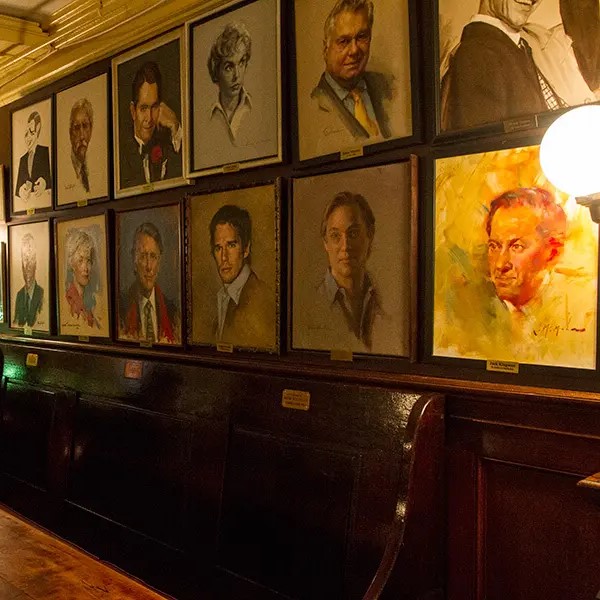
Archer Huntington & John Singer Sargent in NYC were both members of the National Arts Club & the Players Club (above) in NYC. Sargent painted some of the famous paintings on the walls of the Players Club. Those portraits were Edwin Booth (1890, Joseph Jefferson(1890) and Lawrence Barrett who was the founding member of the Players Club NYC.
Each of these Gilded Age individuals, were creative superstars. Especially in the things that they achieved in the Art World. Many great books have been written about all 3 of them. Huntington & Gardner bought paintings, drawings, etchings, master paintings,& books & manuscripts. Sargent bought master paintings & photographs and painted hundreds of watercolors and oil paintings and drawings. Gardner collected paintings, sculptures, & manuscripts.
Each of them had a great affection for Spain’s prime cities, like Madrid, Granada & Seville. In their travels to Spain especially, they were all truly inspired. They loved Spanish culture, Spanish food, flavorful Sangria punch, & the dramatic flamingo dancers.
Spanish Sangria (Classic Sangria recipe)
A flavorful punch made from citrus fruits, sliced oranges & lemons, brandy, a little sugar & Spanish red wine. Ever recipe you see, is just a little different. Some used Rioja wine or Merlot, white rum instead of dark rum, apple slices instead of citrus. Some people like it sparkling & added sparkling water or gingerale or 7-up or lemon-lime soda. For garnish, you could take a wooden skewer, add pineapple chunks & pitted cherries.
1 Orange, (sliced)
1 Lemon, sliced
1 lime, sliced
1 green apple sliced
1 bottle of red Spanish wine
1 1/2 C. rum
1/2 C. triple sec (which is a orange flavored liqueur)
1 c. orange juice
1/2 c. or less of sugar
opt. Sparkling water, 7-up or ginger ale, lemon lime soda
Refrigerate ingredients until ready to mix together. In a pitcher add the wine, rum & triple sec. Slice all the citrus & add to wine. Refrigerate for 2 hours. With a wooden spoon, mash the citrus, add orange juice & sugar (little at a time) and/or Sparkling water or gingerale. With a ladle, add cold sangria over ice into wine glasses. Add skewer of pineapple chunks and pitted cherries.
Visualize a night at a Spanish cafe
I can visualize any of these creatives (Sargent, Gardner & Huntington) walking into a colorful Spanish café or restaurant. Scented with spiced BBQ meats, filled with Spanish music & flamingo dancers are getting ready to perform. They are served a cold glass of Spanish Sangria Punch & a variety of lovely tapas (Spanish appetizers) to start. Followed by Seafood Paella with Saffron Rice for dinner & a Spanish caramelized flan for dessert. They would never forget this Spanish food memory. Maybe Sargent in the back of the café, setting up his paints, & easel or his drawing board. To make some sketches or watercolors (for reference) that he could bring home to paint his large Spanish oil painting (s) – “The Spanish Dance” (1880-1881) & finally his masterpiece “El Jaleo” (1882). In 1922, Archer Huntington bought the painting “Spanish Dance” from a art gallery. Then he placed it in his Hispanic Society of America (NYC) & Isabella Stewart Gardner purchased “El Jaleo” painting; she built a special Moorish alcove room to house it in her Boston museum to display it.
Sargent collected Spanish photographs
Sargent did not collect Spanish art, but he did accumulate over 200 Spanish photographs. I’m sure he used for reference in his paintings, like “The Spanish Dance” & “El Jaleo”. The photographs were of architectural carvings & religious statuary & figures. These photographs were from cities in Spain: Seville, Granada, & Burgos. These Spanish photos are now located at the Victorian & Albert Museum in London, England.
All 3 of these eccentric & creative people went on their annual “Grand Tours” in Europe. Archer Huntington with wife Helen & John Singer Sargent actually lived in Paris & London, England for a time period.
Bella Gardner & Archer Huntington also enjoyed & collected Spanish art, Archer donated paintings like Velasquez & Goya, to Hispanic Society (his mother Mrs. Arabella Huntington purchased 2 paintings at the Rudolph Kann in Paris sale 1907). As a young man & and a art student, Sargent had gone to the Prado Museum & copied the great master, Velasquez. Sargent also copied masters Monet & Manet, also.
They each in their own way, brought Spain back to America. They appreciated beauty & wanted to enhance the art world. 2 of them built grand & poetic American museums: Archer Huntington and his grand Hispanic Society of America (NYC) & Isabella Stewart Gardner Museum in Boston MA. the 3rd (Sargent) filled homes, galleries, & art salons, museums & London’s Royal Academy with his prolific portraits & landscape paintings.
Art World Connections:
We know that Isabella, they called “Bella”, knew Sargent because he painted her portrait a couple times. I found out of another connection also: Archer Huntington knew “Bella” Gardner: he must have been a guest or visitor to Isabella Gardner Museum in Boston in 1911. Because he was so impressed, he invited her to be a member of his Hispanic Society of America NYC (1904); but also to be a Trustee on his Hispanic Society museum Board of Directors. In fact, she was the 1st woman Board member. This was a big deal in the Gilded Age, when women had no rights, like voting. Details later in the blog.
A big Spanish connection between the 3 Creatives: Archer Huntington (NYC) & Isabella Gardner (Boston) collectors both purchased 2 significant “Spanish paintings” painted by artist- John Singer Sargent.
Spanish Paintings by John Singer Sargent
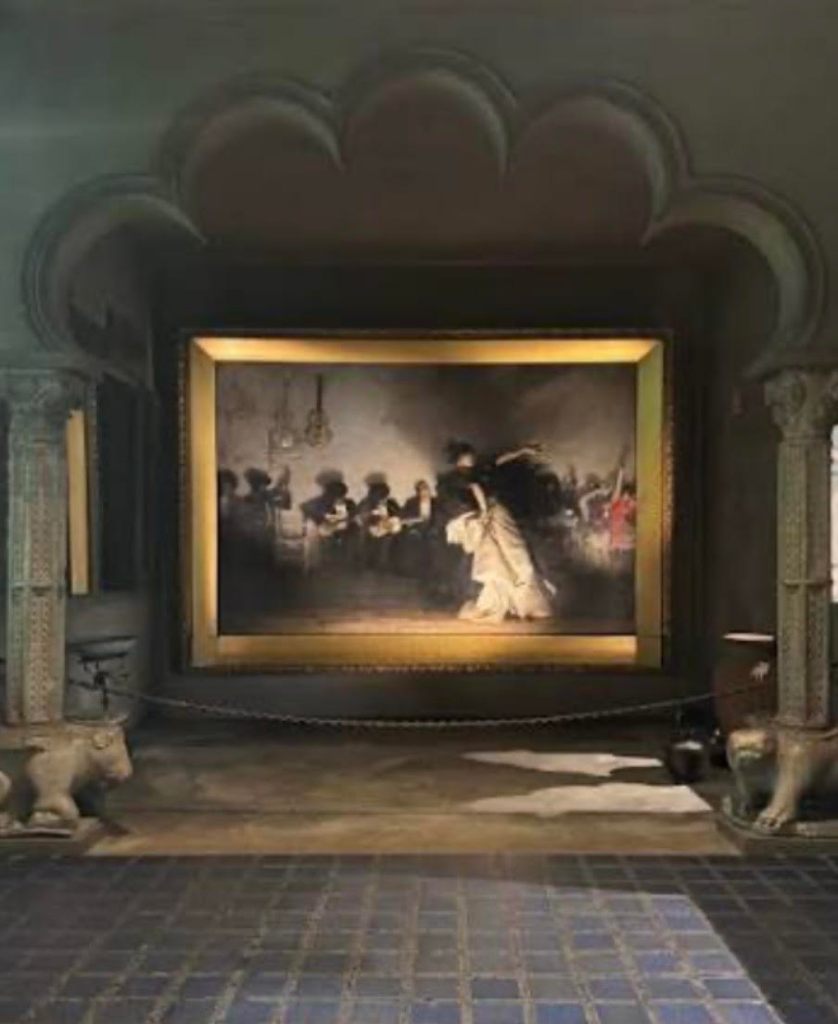
The Spanish paintings by Sargent, “El Jaleo” painting, oil on canvas 92″ x 137″(1882) by John Singer Sargent (located at Isabella Stewart Gardner Museum, Boston, Mass.) Sargent wanted to depict the love of the dramatic Spanish gyspy music & dance in this painting.
The famous painting “El Jaleo” by American artist Sargent was purchased by Gardner. El Jaleo is a dramatic oil master painting depicting a night of music and dance in Spain. Sargents painting was based on drawing he made in the South of Spain on his travelers. A lady in a long white Victorian dress is dancing & maybe singing in front of several Spanish musicians.
Sargent was so very inspired by Spain & their culture. In 1880, he left behind 2 paintings of Spanish Dancer, several drawings, & 2 small oil sketches.
In 1922, Archer Huntington purchased “The Spanish Dancer” painted by John Singer Sargent (1879-1881) at a art gallery. Archer bought it from Knoedler & Co. NYC. Then Archer turned around & donated it to his Hispanic Society of America in NYC. A study for “Spanish Dancer” is oddly at the Nelson Atkin Museum of Art. It is a oil on canvas & size 19″x 28″. There were several art works by Sargent of “The Spanish Dance”: several drawings, a etching, a paintings sketch, and a couple oil paintings. These artworks were all preludes to Sargent’s large master painting “El Jaleo”.
“Canape Lorenzo” (Spicy crab canape with anchovy)
This is a canape in vogue in the Gilded Age time period. Canape Lorenzo was a spicy crab toast canape, famous in New Orleans at Galatoire’s Restaurant in Lousisana. It is a thick spicy béchamel sauce base. It included, butter, flour, & heavy cream (roux) with white pepper & cayenne pepper. The crabmeat, egg yolks, bread crumbs, parmesan cheese, anchovy fillets, & clarified butter on toasted round bread/toasts. In the 1920’s, they would criss-cross the anchovies on top on the canape; for Americans, most would pass on the anchovies. I would mash a small amount of anchovy fillets into the crab mix & broil. The spicy crab mix is put on the bread rounds, dust with parmesan cheese & broil in oven until golden brown.
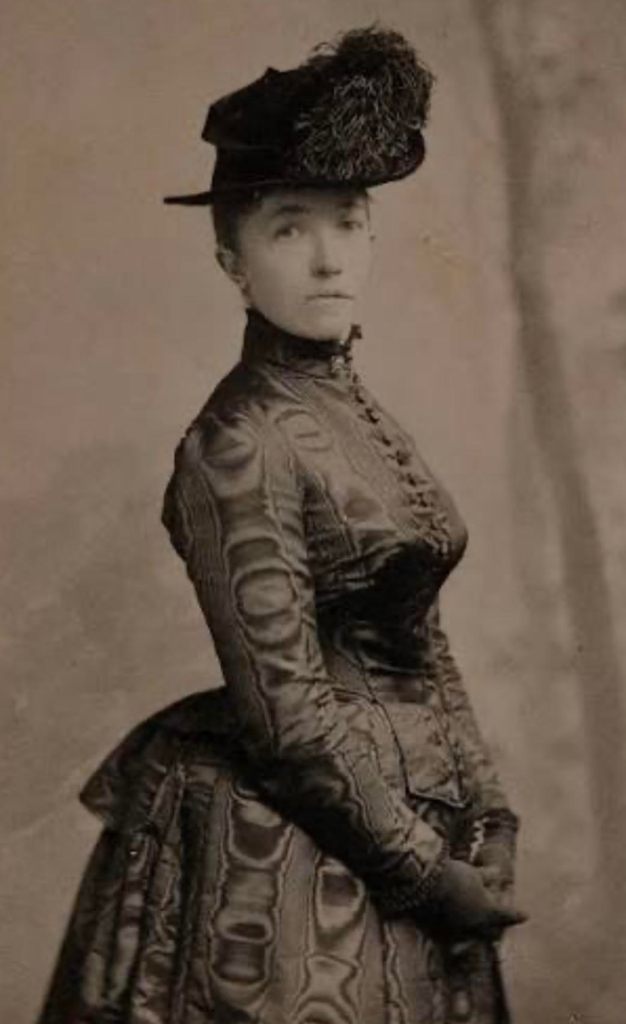
Isabella “Bella” Stewart Gardner (1840-1924)
She was born 1840 in New York City. She married Jack Gardner of Boston, & they moved back to Boston. Boston Society did not welcome her. He died in 1890’s & she had to march on with their ideas about building their Mediterranean museum in Boston, MA.
She was a Bostonian socialite, her friends called her “Bella”. She was a dinner party hostess, art patron, art museum builder, & philanthropist. She loved all European art: Dutch, Italian, French & Spanish. She built a museum in Boston: Isabella Stewart Gardner Museum to show people her amazing European art collections (Spanish, Dutch, Italian, French, etc.)
A elegant (1890’s?) handwritten 10-course dinner menu is preserved. It included a formal Gilded Age menu with champagne & wine pairings. The border of the menu illustrated grapes & grapevines. It states “Menu Dinner Wednesday: Soup, Prawns in Aspic, Chickens, Tongue, Leg of Lamb & Sauce, Larks & Quails in Aspic, Salad, Asparagus, Cheese & Caviare, Dessert, with Champagne “Geo. Goulet” 1880, Claret, Ch. Neycheville 1878, with Coffee, Cognac, Chartreuse” On the bottom of the menu states, “Morel’s 210-211 Piccadilly” which is in London, artwork in circles on top illustrates horse racing & sailing.
Her favorite city on her European “Grand Tours” was Venice, Italy. As one can tell by the stunning architecture of her beautiful romantic museum completely in 1902 in Boston; she called Isabella Stewart Gardner Museum. Once you walk into the Venetian courtyard you are transported to Europe. Not only was this poetic and beautiful building a 3-story Venetian-looking museum, but it was also her home. She had living quarters on the 4th floor, until she died in 1924. Isabella’s Boston museum is a European love letter to Boston, it has Italian Venetian architecture & court yard. The museum is designed in cultural sections: A Dutch Room, The Spanish Cloisters, Gothic Room, Early Italian Room, Raphael Room, Moorish Room,& Veronese Room.
She surrounded herself with really brilliant scholarly gentlemen & art collectors. She asked many of them to join her museum’s Board of Directors. After Archer Huntington met her & visited Isabella Gardner Museum (1911), he asked her to join his Hispanic Society & the Board of Directors in NYC.
At the Isabella Stewart Gardner Museum archives: I found a warm handwritten 4-page letter – To: Mrs. Isabella Gardner from: Archer M. Huntington. The letter was from the Office of the President of Hispanic Society of America NYC. The Head of the Stationary was the round crest/seal of Hispanic Society of America center on the top of the page.
The letter was dated: April 5, 1911
“My dear Mrs. Gardner: There is a vacancy on the Advisory Board of the Hispanic Society & subject to your permission, I shall be happy to present your name to complete the number of the 10 members of that Board.”……”it is in factia recognition on the part of our society of the honor due to those who have rendered the highest service to art & literature…related to the field of our work.”….. “You will 1st be elected to the Society, the membership of which is 100; subsequently to the Advisory Board…..Yours very sincerely, Archer M. Huntington”.
The list of Advisory Board members of the Hispanic Society of America is very impressive: “the 9 members are: Porfirio Diaz [former president of Mexico], Arthur Twining Hadley, Marcelino Menendez Pelayo, James Fitzmaurice Kelly, R. Foulche-Delbosc, Hugo Rennert, Nicholas Murray Butler, The Duke of Loubat, & Elihu Root (US Senator & US Secretary of State).” Mrs. Isabella Gardner also received a special silver membership medal from the Hispanic Society.
In the Gardner Museum another letter is preserved From Archer Huntington to Isabella Stewart Gardner, April 25, 1911. Again he is giving her the highest of compliments for her achievements:
” It would be childish to praise alone what you have built when it is within my power to frankly admire the author of the greatest work done by an American woman. Surely you will forgive a badly turned phrase — which comes from the heart”.
Isabella Steward Gardner had many Sargent paintings sprinkled around her stunning Venetian museum in Boston in her different themed rooms. But the Spanish showpiece is located in the Spanish Cloister, a Moorish Piece by Sargent. This large dramatic horizontal painting is called: “El Jaleo” at her Boston museum.
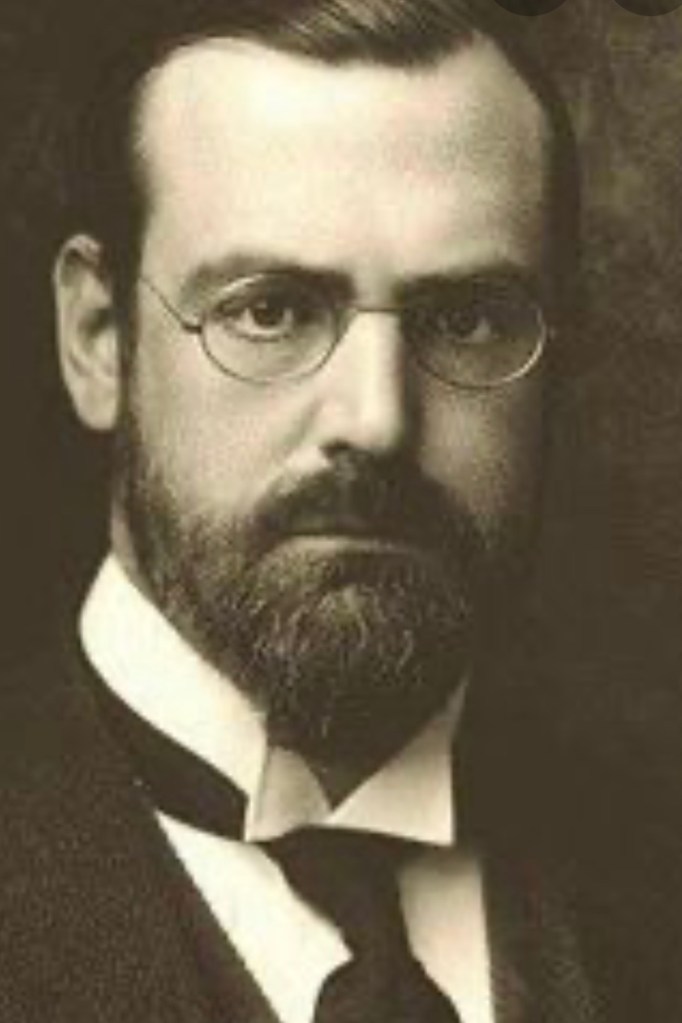
Archer M. Huntington, New York City, NY (1870-1955):
Archer was born 1870 in New York City & spent most of his life in New York City. Was tutored as a young boy/man with private tutors. He traveled a lot to Europe with his parents: Collis P. Huntington (the “Big 4” Railroad fame) & Arabella D. Huntington (Art collector, especially French paintings). They had a annual European grand tour every summer & Archer saw it all: Italy, France, Spain, England, Greece, & Ireland. He spoke several languages: English, Spanish, Arabic, French, Greek, & Latin.
(1870-1955) art collector of Spanish treasures, art & rare books, ancient manuscripts & coins, he was the founder of Hispanic Society of America – NYC. People in New York City, called it the Spanish Museum. He opened his museum to the public in 1904.
Archer Huntington was a writer, a poet, an expert in the Spanish culture, translator of the “Poem of the Cid”. He wrote “A note-book in Northern Spain” & many other books. He was a member of the Hobby Club, Players Club, & National Art Club of New York. In 1922, Archer married to 2nd wife – Anna Huntington, a famous sculptress, who sculptures of figures remind me of the sensual Rodin sculptures.
Over the years Archer often hosted the Huntington’s family Thanksgiving Dinner annually. Also, The Archer Huntington’s built a Moorish Spanish home called “Atalaya” in South Carolina (by Myrtle Beach). Anna & Archer Huntington also bought & built the stunning Brookgreen Gardens with sculpture gardens, very close to Atalaya Castle.
There is a street named after Archer Huntington in La Coruna, Galicia (Spain). The street sign reads “Calle/Rua Mister Archer Milton Huntington”. That is quite a honor.
The Huntingtons (Arabella Huntington and Sargent) and Sargent paintings: Huntington Library San Marino, CA
Arabella Huntington (who was Mrs. Collis P. Huntington & Mrs. Henry E. Huntington) was Archer M. Huntington’s mother. The Huntington Library owned by H. E. Huntington & Arabella Huntington holds 4 significant paintings of John Singer Sargent’s: they are “Sphinx & Chimaera” (1916-1921), “The Judgement of Paris” (1920-1922), “Mrs. Wm Playfair “(1887) and a “Portrait of Charles Stuart Forbes” (1882) along with drawings & ephemera with the paintings.
Archer Huntington & Spanish painter: Sorolla
In 1908, Archer met talented Spanish painter: Joaquin Sorolla in England. Sorolla paintings are stunning & he was quite the colorist; similar to Sargent’s way of painting. Huntington made Sorolla, a member of the Hispanic Society & asked Sorolla to exhibit his paintings at the museum in 1909. It was a huge art show of Sorolla’s: they hung 356 paintings which 195 (almost 1/2) of the paintings were sold!! Sorolla also was commissioned by Huntington to paint 14 murals on the Hispanic Society of America NYC walls.
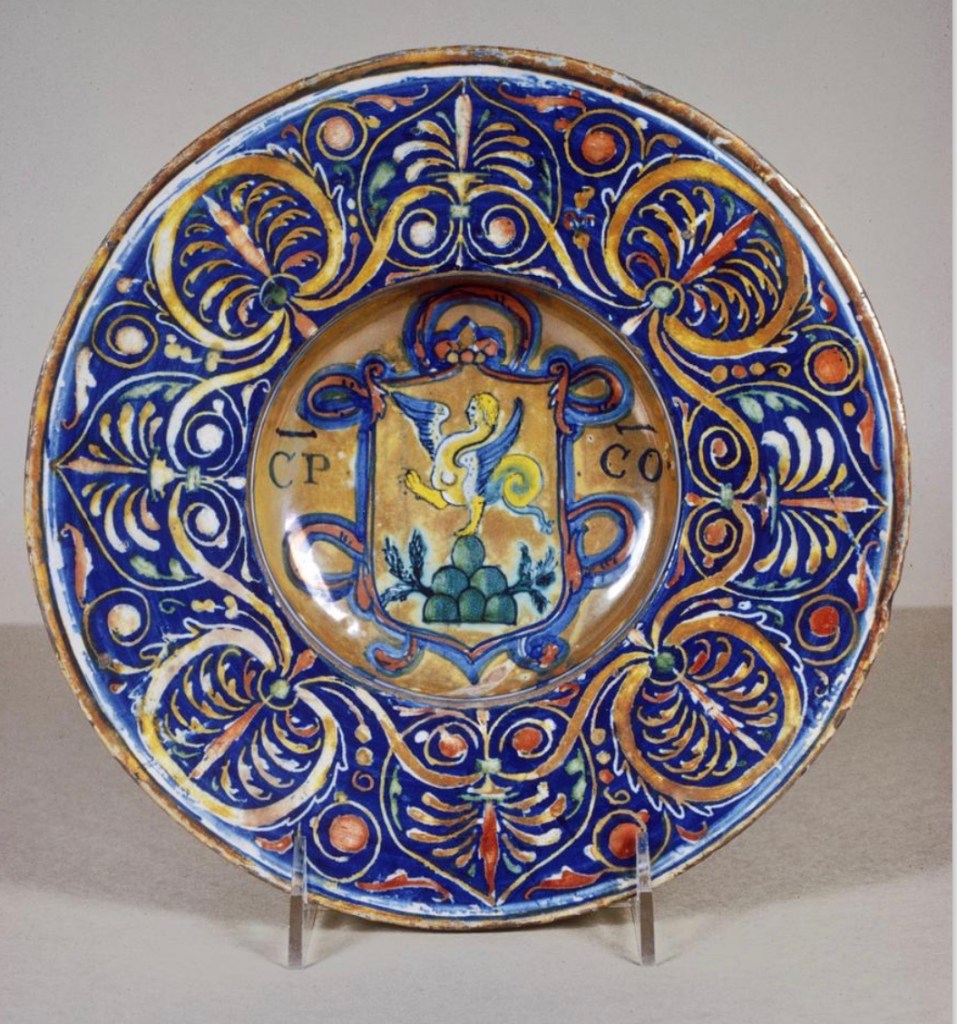
Hobby Club & Archer Huntington (7th Hobby Club Meeting: Subject: Joan of Arc Statue – January 25, 1913)
The Hobby Club of New York (incorporated in June 1911). The hosted grand multi-course Dinners for their members. In all I think there were 30-50 members, over the years the membership grew. The purpose of their meeting & dinners was to share their collections. Their collections were a variety of things, coins, documents, manuscripts, paintings, drawings, etching, sculptures, etc. They picked a host & that host brought his treasures to the Metropolitan Club or Union Club NYC. As of February of 1914, the Hobby Club members opened up their homes & invited members to have dinner and show their treasured collections. Archer Huntington & Henry Edwards Huntington were both members of the Hobby Club.
On the 7th Hobby Club Dinner dated January 25, 1913, The host: was “Joan of Arc Statue committee”. The Location” was at the American Numismatic Society Building (Archer Huntington was a honorary president of the ANS, NYC.) So he was a member of the Hobby Club & could have been the host of sorts. The Subject was Joan of Arc Loan Exhibition. The exhibition was from January 6th to February 8, 1913.
On Saturday, January 25, 1913, Joan of Arc Committee hosted this Hobby Club event. it was located at the American Numismatic Society building. “Dr. George F. Kunz presented to each member a special Hobby Club edition of the very artistic illustrated catalogue. The Catalogue was 224 – page large & it served as a fundraiser & promotional package for the Joan of Arc statue by Anna Hyatt, Sculptress [later Huntington]. The members later were entertained at the Hispano-American Museum, where their fellow member, Mr. Archer M. Huntington, acted as host & guide, showing & explaining the many rare and beautiful art & literary treasures” Wikipedia “Hobby Club” of New York, Incorporated June 1911. .
There was an impressive Joan of Arc loan exhibition catalogue: with paintings, pictures, medals, coins, statuary, books, porcelains, manuscripts, curious, etc. Wynkoop Hallenbeck Crawford Co. The Hobby Club edition (35 copies printed for the members) on the special meetings to be held on January 25th 1913…to view the statue of Joan of Arc in the city of New York. The Joan of Arc statue was created by Anna Hyatt, she was so talented. The statues was cast by The Gorham Manufacturing Company (silver company . She also became Anna Hyatt Huntington when she married Archer Huntington years later. Archer & Anna Huntington married in 1923.
American Numismatic Society is the oldest museum in USA & it was founded in 1858. The Address is 75 Varick Street (by Canal & Hudson) in Lower Manhattan. NYC. Year later in December 6th, 1915, The Joan of Arc statue by Anna Hyatt was dedicated, it was NYC first public statue dedicated to a real historical woman. It was Located at Riverside Drive & 93rd Street in NYC.
Archer Huntington was the president of ANS American Numismatic Society from 1905 to 1910, there were no presidents elected from 1910-1915. Archer was a honorary president until he died in 1955. Archer donated the land & funding for the building Audubon Terrace in upper Manhattan (1908).
A typical menu for the Hobby Club of New York (Incorporated 1911) was
1. Oyster on the Half Shell or Melon Cocktail or Caviar with a relish dish of salted Almonds, Celery, Olives, & Radishes, 2. Soup Course: Green Turtle Soup, Oxtail Soup, or New Orleans Gumbo 3. Fish Course: Brook Trout or SS Crabs Lorenzo 4. Poultry Course: Timbales of Chicken or Squabs 5. Entrée: Spring Lamb with Mint Sauce served with Potatoes, French Green Beans or Petit Pois, or Spring Baby Asparagus 6. Roman Punch 7. Game Course: Venison cutlets 8. Salad Course Heart of Lettuce [wedge salad] or Salad chiffonade, or Lettuce & Grapefruit 9. Cheese Course: French Camembert & Roquefort cheeses, 10.Fruits and Ices: Strawberries & Fancy Ices 11. Desserts Petit fours 12. After dinner liqueurs & coffee with bonbons. Document: HEH Collection MS17/1uncat (Hobby Club menus of HEH) Huntington Library San Marino, CA
The 7th Hobby Club Menu has a Medieval Theme. The main focus was Joan of Arc Loan Exhibition and the Hispanic Society. The host was Archer Huntington as guide. This Medieval menu was in Latin & hard to translate. Also, some unusually food was served like Lavender Ice Cream. For details, go to my Hobby Club Dinner & HEH blog.
Entertainments with the C.P. Huntington Family with his son Archer Huntington
Archer Huntington was present at several of his father’s Southern Pacific Co. Dinner. These annual banquet banquets, in San Francisco, CA. His father hosted these fancy 16-course dinners: Collis P. Huntington ( the President of Southern Pacific Co.). The company operated ships, trains, & ferries all across America. Archer’s father Collis, employed 50,000 people in 1900. There were also dinners at the C.P and Arabella Huntington’s NYC mansion at No. 2 57th St. NYC
When Archer as a 19 yr. old boy, he also was invited with his parents to the President of Mexico castle & had dinner with him. He announced at these formal dinner that he wanted to open up a Spanish Museum in America. For details: Check out my blog Archer M. Huntington, Philanthropist.
A typical menu hosted Collis P. Huntington (President of Southern Pacific Co. NYC & SF). A dinner attended by Archer Huntington was as follows. Oyster Cocktail, Chicken Consomme Luculus, Relish of Salted Almonds, Anchovies, Celery Sticks, Queen Olives, & Cheese Matches, Frog Legs Colbert style, Saddle of Spring Lamb, Havannaise, Supreme of Chicken, Champagne Punch Surprise, Snipes on Toast, Mixed Salads & Tomato Mayonnaise, Asparagus Polonaise, Stuffed Bottom of Artichokes Victoria, Ice Cream on Leaves, Assorted Fruits, Fancy Cakes, Chestnuts Glaces, Assorted Cheeses & Black Coffee Dinner at the Palace Hotel San Francisco, CA
Espagnole Sauce (a Spanish spicy sauce & one of the mother sauce of French cuisine).
A rich rust-colored flavorful sauce made with dark brown roux, vegetable & aromatic herbs & peppercorns to spice it up. Butter & flour are mixed up with rich veal or beef stock to make the thick roux. Sauté minced veggies like onion, carrots, & celery with & parsley, then add tomato paste & the roux. In the sauce, add a little Spanish wine. In a cheesecloth bag: add a bay leaf, sprigs of thyme, & 8-10 peppercorns. Let this cheesecloth herb bag sit in sauce to capture flavors, before serving take cheesecloth bag out of sauce & serve sauce in a gravy boat.
Archer & 1st wife Helen Huntington in Madeira, Spain from South America (1903) then to Paris to meet his mother, Mrs. Arabella Huntington:
Halloween 1903: Paris, France (Oct. 13 1903 – Jan. 1904) widow, Mrs. Arabella Huntington is with her son, Archer M. Huntington & his first wife: Helen Huntington -they are located in Paris. They stayed at one of Mrs. Arabella Huntington’s favorite hotels: Hotel Bristol, Paris. Document: HEH Coll. MS HEH 2898 (Huntington Library, San Marino, CA)
– Arabella writes a letter to Charles Tweed, that states Archer & Helen are arriving soon from Madeira, Spain from South America…. [so when know another place Archer traveled in Spain.)
How did they celebrate Halloween in Paris? Probably with a bunch of Americans that lived & vacationed in Paris & went to a grand costume party, is my guess. That year, The Huntingtons celebrated all the holidays in Paris: Halloween, Thanksgiving, Christmas, & New Years, also. The Huntingtons were on a ship in 1904 to get back to America, so Archer could open his Spanish Museum, NYC.
Huntingtons aboard the grand “S.S Kaiser Wilhelm II” ship From France to NYC
January 13, 1904 ship tickets are under Archer Huntington’s name. The Huntingtons & their entourage are traveling from Cherbourg, France to the Port of New York on January 20, 1904. It took the ship – 7 days to cross the Atlantic Ocean from France to NY.
The “S. S. Kaiser Wilhelm II” passenger lists reads 1. Mrs. C. P. Huntington [ Arabella] last place of residence: Paris. 2. Miss Campbell [Arabella friend & social secretary, Carrie M. Campbell], 3. Mr. Archer M. Huntington [Arabella’s son] 4. Mrs. Archer M. Huntington [Helen, Archer’s 1st wife] 5. Dominguez Marking 27, valet to Archer Huntington, 6. Angus McGillvery 30 yrs., Scottish valet [& later Head Butler to Mrs. C. P. Huntington],7. Jane Reifer, 24 yrs., German maid to Mrs. C. P. Huntington, 8. Suzanne Gilsmere, 27 years old & Swiss maid to Mrs. Archer Huntington (Helen) Document: http://www.ellisisland.org
Archer M. Huntington builds a museum in NYC called “Hispanic Society of America” (1904)
In his Grand Tour travels, Archer really fell in love with Spain. In 1889, at the young age of 19 years old, Archer announced to his father & mother (Collis P. & Arabella Huntington) that he wanted to build a Spanish Museum. Years later, he did just that & he called it the “Hispanic Society of America” in New York City & it was opened to the public in 1904. Now, they call it the Hispanic Museum.
In the 1890-1900, Archer traveled to so many Spanish cities: Madrid, Madeira, & Seville & many other cities. He writes about his travels in his book: Notebook of Northern Spain. In 1907, Archer’s mother, Arabella D. Huntington also bought 2 valuable master Spanish paintings: a Velasquez & a Goya (Ruldolph Kann Collection in Paris). Arabella Huntington gave money generously to Archer and his causes, & these paintings to Archer Huntington & his museum: Hispanic Society of America, NYC.
“Spain, in Picture, Dance, & Song” entertainment at Waldorf Hotel, NYC (1912)
On March 17, 1912, the New York Times Newspaper informs society of a different event. “Spain, Dance, & Song” will be the subject on Saturday afternoon when the School Art League [NYC] will give an entertainment at the Waldorf [Hotel]. Patrons are Mrs. John G. Agar, Mrs. John Alexander, Mrs. Robert W. de Forest, Mrs. Howard Gans, Mrs. Randolph Guggenheimer, Mrs. Ben Ali Haggin, Miss Eleanor Hewitt, Archer Huntington, Mrs. Collis P. Huntington [Arabella], Miss Olivia Leventritt, Mrs. Alfred Meyer, Mrs. Heinrich Neyn, William Shepherd, James Speyer, Mrs. Charles Sprague-Smith, Mrs. Benjamin Stern, Richard Welling, & Mrs. Schuyler van Rensselcar.” Document : New York Times Newspaper – March 17, 1912
Spanish Canape – are called “Tapas or Pintxos” are delicious bite-size finger food. At a Tapas Party, usually there are a variety of different Spanish nibbles (3-5) while enjoying cocktails or sangria punch. Like Bacon- wrapped dates are popped on a cookie sheet & baked for a light canape. Pan con Tomate Y Jamon (a tomato bread toast with serrano ham), super simple: like popular Italian bruschetta (tomato & basil leaves), this Spanish version, is sliced Fresh baguette then toasted, with tomatoes slices, olive oil, sea salt & thin sliced of Serrano ham.
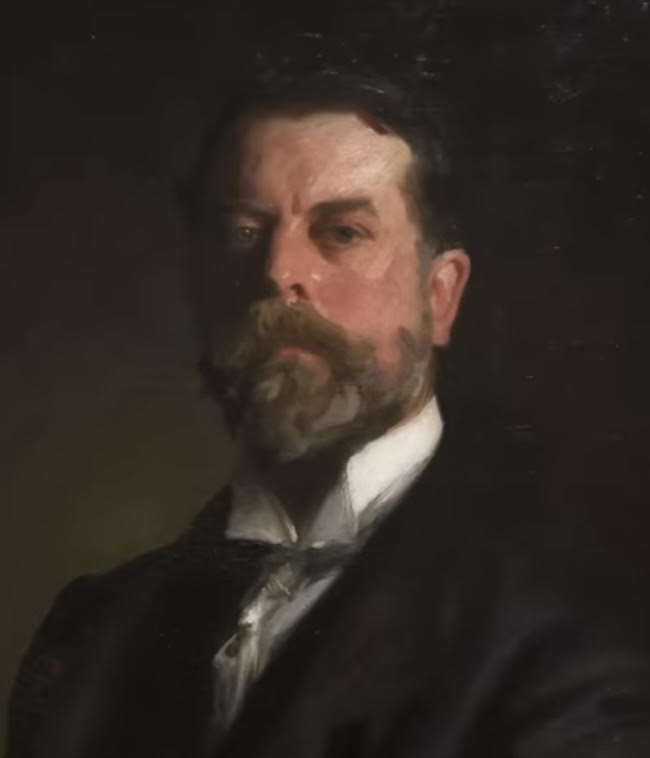
John Singer Sargent:
(1856-1925) Sargent was a Master painter: master oil painter, & a master watercolorist. He was a great draftsmen in all artwork that he created. He created detailed-pencil drawings & sketches before he water-colored on top.
Sargent’s 2 completely different styles of Paintings:
In my opinion, Sargent had 2 completely different styles of portrait painting: his formal portraits for elite clients. They are very realistic, usually dramatic with darks and lights. They were proper Gilded Age portraits & very close to the likeness of his sitters. Which sometimes got him in trouble, they wanted to look prettier….. With a couple of strokes of paint, he could make a velvet gown look like you could touch it!
Then Sargent’s other style: his free-painterly paintings of his friends at “plein air” painting events or picnics or a portrait of Monet’s painting out in a field. Sargent’s collection of these exquisite paintings can almost look abstract, when you look at them up-close. And then from far-away some paintings look like a photograph! Just amazing what a great draftsman Sargent was. He was brilliant at a artistic one-stroke or ‘less is more” kind of painting. As a painter, this is a very difficult to paint like that and then when to know that the painting is done. These paintings shows just how excellent he was as a painter. I feel like he was one of our greatest American painters!!
He was famous for his portraits of high society, but he also painted stunning landscapes & people al fresco or “Plein Air”. paintings in France, Venice, Spain and Algiers, Africa. He made a lot of money from his commissioned Gilded Age portraits, but he didn’t seem to enjoy doing them.
A love for “Plein Air” paintings (Sargent & Monet)
Plein-air painting was a new trend/or process of paintings in the 1880’s. Sargent painted Monet outside “Plein air painting” – a new kind of fresh painting or “in the moment” creations. Painters paintings in their studio have a more difficult time, telling their story of light. Artists & painters understand that colors & shadows change fast during the day while their painting outside. In the morning, nature gives us a cooler palette of colors (blues, violets, & lavenders). By sunset, nature gives us a warmer palette of colors like yellows, peach, orange, pinks & reds. Monet really understood that concept: every hour the light & the colors change in nature. Monet understood Goethe color theory & “simultaneous contrast” (opposite colors next to each other & how they affect each other). In his amazing Giverny garden (a train ride north of Paris), Monet was a brilliant colorist, using lavender, soft yellows & peaches together. On the hour, the Monet family would hand Claude Monet (the painting he did yesterday) for the exact color & shadows of that time period in the day light. Thats why Monets paintings are so amazing and he really captured nature’s colors. Sargent & Monet seemed to understand each other well. Sargent became a life-long friend of Monet, exchanging letters. Sargent wrote his letters to Monet in French. Document: For details on Color Theory – Check out my blog on Color Theory & the Huntingtons.
In London, Sargent was accepted into the Royal Academy of Art, which is the highest achievement in the European Art World. These London artists put a “R. A.”, after their signature, name on their paintings, for their Royal Academy designation.
Sargent was born in Florence Italy to American parents (1856-1925)
John Singer Sargent was born in Florence, Italy in 1856. His father was a doctor & both parents were expatriates, which made Sargent, a American. Winters were spent in Rome, Nice or Florence Italy & summers were spent in Biarritz or Pau. He spoke 4 different languages which quite impressive: Italian, English, French & German. Early on, Sargent studied art at the Accademia delle Belle Arti in Florence.
Sargent birth year (1856) shocked me, because I always thought he was a contemporary of Archer Huntington. But actually Sargent was closer in age to Archer’s mother in age, Mrs. Arabella Huntington (born in 1850).
Sargent as a art student copies the masters at the Prado Museum, Madrid, Spain
Young John Singer Sargent as a art student, copied the master paintings of Velasquez at the Prado in Madrid, Spain. At the encouragement of his art teacher, Duran. Velasquez was a brilliant Spanish painter, not only oil paintings but watercolor, also. I personally have been quite inspired by Velasquez travel journals. His exceptional watercolors are amazing small landscapes of people & places he visited. At his teacher direction, Sargent also copied the master works of Degas, Hals, El Greco, & Goya
Sargent was a art collector also, he bought Monet & Manet paintings, he had a lifelong friendship with Monet. I never had thought of Sargent as a art collector but of course he was. He bought several paintings from Claude Monet & acquire a paintings of Edouard Manet (at Manet’s estate sale in 1884). Sargent also was given a sculpture called “L’Homme qui Marche (The Walking Man) by Auguste Rodin. Rodin was a amazing French figure sculptor. He must have admired Sargent greatly to give him one of his sculptures.
Sargent, world traveler
Sargent was a world and European traveler to Spain, England, & Paris. He lived in Florence- Italy, Paris & England. He also spent parcels of time in America (NYC & Newport, Rhode Island); painting portraits (famous & important Americans) along the way. Sargent’s master paintings are sprinkled in museums all around USA & the world: Isabella Gardner Museum in Boston, Hispanic Society (Archer Huntington’s) NYC, Metropolitan Museum of Art, & Huntington Library -San Marino – CA, & Fogg Art Museum Harvard University, the Tate Museum London, England.
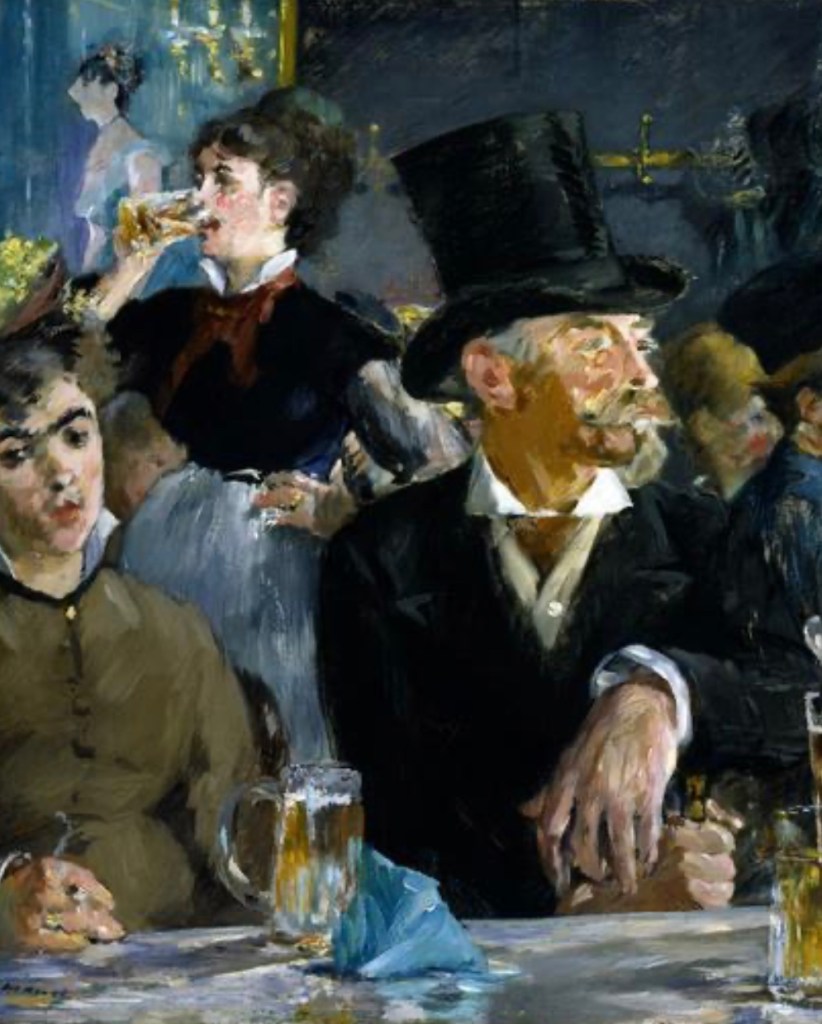
Sargent travels to Paris, becomes friends with Monet
In May of 1874, Sargent traveled to Paris, France. He studied portrait paintings under his teacher: Carolus-Duran. He then enrolled at the Ecole des Beaux Arts in Paris. Duran was friends with French artists Manet (painting above) & Monet; Duran introduced Sargent to Claude Monet.
Sargent had a friendship with Claude Monet through their years. Sargent painting Monet portrait a couple times, one a formal head portrait & another while they were paintings outside: “Plein air paintings.” Sargent often did these lovely paintings of “painters painting” outside. They were “In the moment” paintings like a diary of sorts. Sargent wrote Monet letters in French, thanking him for his special time in Giverny France & inviting Monet to his home (s) in England. In 1877, he entered a portrait painting (s) at the Salon in Paris. He entered the Salon again in 1879 with a portrait of his teacher, Carolus-Duran, winning a prize of 2nd class medal for it.
Sargent travels to Spain (Madrid, Seville, & many other cities)
In 1879, Sargent traveled to Spain, where he copied paintings of Velazquez in the Prado Museum. Velazquez was brilliant at drama in his portraits. Sargent was so inspired by Spanish music & dance, he drew numerous drawings while in Spain & then later painted “the Spanish Dance” (Hispanic Society of America, NYC) & “El Jaleo” (Isabella Stewart Gardner Museum, Boston) drawings in Spain, watercolors & then made oil paintings from his drawings.
A stunning art show called “Sargent & Spain” Oct. 2022-Jan. 2023 at the National Gallery of Art in Washington DC (nga.gov). The curators educate us that Sargent created 120 amazing Spanish piece of art. Sargent chose oils, watercolors, & drawings throughout the years on his trips to Spain. If you ever visit Washington DC, do not miss out on this amazing museum of treasure troves. One day on a trip, I spent 7 hours in this glorious museum!! Also, don’t miss the National Portrait Museum in Wash DC. too, is fantastic and filled with amazing paintings.
Sargent lived & painted in Paris
In 1883, Sargent moved to into his own art studio at 41 boulevard Berthier in Paris. Sargent was a art collector: In 1884, he bought a painting by Manet, at his Paris Studio. He also bought several paintings by Claude Monet in Paris, France. One of called “Rock at Treport”, another was a Mediterranean landscape from Monet’s series called “Bordighera”. It depicted 2 houses surrounded by groves of oranges & lemons.
On several of Sargent’s self portraits, which he painted more then a half dozen. On (3 of them) dated (1906-1907) he painted the exact same painting. Sargent looks very formal, he is wearing a black/dark grey suit & white long silk tie. 2 of the 3 paintings are the exact same size. One of the portraits is darker, one of them is brighter in his face & one is greyer in his suit, but the exact same portrait, it shows how great a painter – he was to be able to accomplish painting the exact image 3 xtimes. I noticed he signed his paintings in a unusual location also – it was on top left side of the painting. He signed his name “John S. Sargent”.
In 1883-4, Sargent was obsessed with painting of Madame X (who was Madame Pierre Gautreau) an American living in Paris. He showed the life-size painting at the Salon 1884. It was of elegant Madame X in a elegant black evening gown with gold shoulder straps & one of them provocatively down. It was quite the scandal because he painted the long dress, with one of the shoulder straps hanging down in a seductive way. This is hard for me to believe that Paris of all places had a problem with this painting – when they have nude statues everywhere in Paris. The Parisian public was so crazy about this painting & were so hostile to Sargent himself, he actually had moved out of Paris to England. Sargent eventually painting the gold strap back on Madame X’s shoulder. He kept the painting in his art studio and never sold it. He felt it was one of his very best paintings.
In London, where he painted portraits of writer, Henry James & many other people. In 1886, he moved to London England moving into Whistler’s old art studio. He studio address was 13 Tite Street, later it was 33 Tite Street London, England. His drawings & paintings were considered “Avant Garde” at the time. He was a founding member of the New English Art Club.
Sargent painting in America & the world
Sargent 1st trip to America (1876 ) he traveled to Niagara Falls, NY & Philadelphia to see the Centennial Exposition. He traveled with his mother & his sister Emily who was also a painter.
Sargent 2nd trip to America (1887-1888) He traveled to Newport, Rhode Island to paint a portrait of Henry G. Marquand. He painted many portraits on that trip and his 1st solo exhibition at Boston’s St. Botolph Club.
Sargent was a very prolific painter, & his paintings are in so many museums. In America, a lion share of Sargent drawings & watercolors are at the Metropolitan Museum of Art in NYC. Sadly, alot of these treasures are not on view. Sometimes in America Sargent would spend 8 months at a time in NYC and Newport, RI. Many of Sargent’s paintings are at Isabella Gardner Stewart Museum like “El Jaleo” (1882) & Isabella portraits & “Madame X” but also at the Museum of Fine Arts in Boston.
In Europe, Sargent’s paintings are represented: at several museums: the “Carnation, Lily Lily Rose” & “Claude Monet Painting by the Edge of a wood” is at Tate Museum – London, & “Lady Agnew of Lochnaw is at Scottish National Gallery in Edinburgh.
Sargent’s Dinner Party April 2, 1888
Sargent hosted a amazing grand dinner for his male art friends in NYC. This party took place on April 2nd, 1888 & it was a lavish multi-course dinner. This party was probably a “thank you” for the many American friends. Who had invited Sargent to visit and stay in NYC & Newport and /or paint their portrait. Sargent arrived in America in September of 1887 & he was quite prolific. He stayed for a 8-month period of time, he had painted 20 portraits during that trip. Some of his portrait were life-size & very large.
An invitation to a formal-dress dinner on April 2, 1888 was sent out to 32 guests, with Sieghortners in New York City catering this Sargent hosted event on Lafayette Place, NYC. Sargent invited artists, art collectors & friends to join him for multi-course dinner. There are 4 photographs of this Artist’s dinner party, that survive at the Smithsonian Archives of American Art in Washington DC. These photos depict well-dressed elegant men in white tie & tails. A lovely festive candle lit table (with several large silver candelabras & other silver single candle sticks) & large spring flower arrangements, with swags, garlands, & flowers line the long table. Elegant desserts along the dessert table with footed silver doily-lined cake stands. Also, Sargent seated in the center of friends with his hand to his head. A man standing making a speech with Sargent looking on & smiling.
The deckled edged white dinner menu states in handwriting at the top “Sargent’s Dinner” & in fancy font “Menu”:
The Sargent Dinner (12-course menu) included:
[1st or Oyster Course] Huites (Oysters), served with Relish Dish: Celery, Radish, & Olives
[Soup Course] was Green Turtle Soup,
[Hors d’oeuvres course] Canape de la Reine,
[Fish course] Truite a la maitre d’Hotel [Trout with a compound of herbs and sweet butter] with Cucumbers & Pommes Novelle (New Potatoes),
[Entree Course] Salted New Spring Leg of Lamb,
[Game Course] Ris de Veau with Champigons frais (Veal with Mushrooms with a rich Mushroom & Wine Sauce), [& Vegetables] Petit pois (Baby Green Peas), Asparague (Asparagus),
[Punch or Sorbet Course] Sorbet au Kirsch (Cherries in a Kirschwasser liqueur),
[Canape Course:] Becandin aus ____Canape,
[Salad course] Salade de ____ ,Chapon ____
[Pudding Course:] Pudding Nesselrode,
[Glace or Ice Cream Course] Glaces fantasie, Fruits, Fraises (Strawberries),
Dessert Assorties, Petit Fours, Cafe (Coffee).
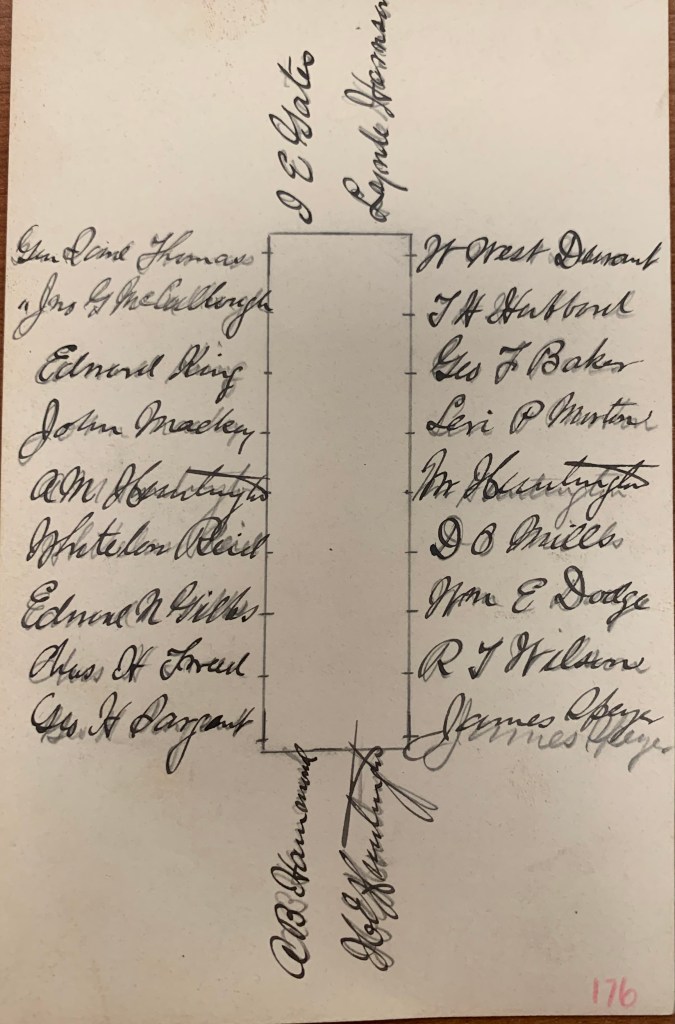
Sargent’s Dinner was catered by Sieghortner, New York City, NY 1888, [the Gilded Age historic high society prestigious caterers, located on Lafayette Place, NYC]. They had European trained chefs to cater dinners, weddings & banquets. Menu photograph Bill Plyer & James Carroll Beckwith Papers, courtesy of J. Carter Courtney. On the back of the fancy dinner menu is the signatures of all of Sargent dinner creative guests that attended the party. Some signatures that I can make out are: Louis C. Tiffany (artist & jeweler), W. M. Laffaty, Dewey, J. Carroll Beckwith about 32 signatures in all. On the black and white photographs at the Smithsonian, titled “Artist’s Party with Sargent” indicate some artist’s names: Blashfield, LaFarge, & Chase are named also.
Tuite a la Maitre d’Hotel: for Sargent’s Gilded Age fish course served after the soup or appetizer course: Its is a pan-fried whole browned trout in a tasty lemony parsley sauce made with compound butter. Compound Butter is unsalted butter, flat-leaf or Italian parsley, lemon juice, salt & white pepper, (garlic & baby chives could be added) cut into rounds.
Bouchee a la Reine (Vol au vent) : is a lovely appetizer of ground chicken & truffles with mushroom cream sauce. It is a puffed pastry vessel with a top; it is filled with veal sweetbreads, chicken quenelles, button or Paris or shiitake mushrooms, onion, garlic, cream, butter & flour (to make a roux) salt & white pepper & fresh shavings of black truffles sprinkled around the sauce.
Sorbet au kirsch [Cherry Sorbet with Kirsch]: is a dessert of fresh sweet cherries (pitted) with a simple syrup made of granulated sugar, water, lemon juice and Kirschwasser (cherry brandy) made into a gorgeous maroon- colored ice cream.
Nesselrode Pudding: [it looks like chocolate mousee] but it is a molded frozen custard of chestnut puree, vanilla extract, heavy cream, egg yolks, candied/dried fruits or cherries/ or raisins, & maraschino Liqueur (or brandy or cognac) with flaked almonds. This pudding is made in a Charlotte pudding mold.
Document: Book: John Singer Sargent Biography by Elaine Kilmurray
Document: In a article/ Sargent Dinner menu: found on Journals.uchicago.edu called Notes on John Singer Sargent in New York, 1888-1890 by Trevor J. Fairbrother included this Sargent’s Gilded Age Dinner Menu. Menu photograph Bill Plyer & James Carroll Beckwith Papers, courtesy of J. Carter Courtney.
Photos of Artist’s Party at the Smithsonian Archives of American Art: “Artists party with John Singer Sargent & others 1890, Otto Bacher papers 1873-1928. I am not sure if this is the same artist party in 1888 hosted by Sargent or maybe there were 2 different parties hosted by Sargent.?

