
by Nancy Armitage
Royal Livery, “Full Livery”, Formal Dinner Livery, Livery Brass Buttons, Hunt Club livery, what does all these phrases all mean? It is a term of the dress or uniform of the servants in a wealthy Gilded Age mansions or houses. The tradition of “Ceremonial Livery” (think of the HBO “Gilded Age” at the Russell’s Ball or Fancy Dinner). In the “Gilded Age” series, there is a scene, where 10-12 footmen are lined up by the Dining-Room Table. They were dressed in very fancy “ceremonial” uniforms in red & gold strips. Also, red & gold would have represented the family colors. These footmen all had on a double-breasted fancy red & gold cut-away coats; the coats had 12-14 livery brass/gold buttons. Also, brass/gold buttons around their sleeves & numerous more livery buttons on the back of their livery coats. The footmen also wore a red vest/ or vest with 9 smaller brass/gold livery buttons, with a white shirt & white bow tie. They had short gold or red velvet pants “breeches” to their knees, white socks, & a loafer shoe with a buckle. each of the mansion family had “livery colors”, for the men servants like the coachmen or limo drivers.

Just to let you know, none of the livery buttons shown on this blog to my knowledge are the Huntington family livery buttons. But they could be…..nobody seems to know anything about this Gilded Age subject or the details of found livery buttons. The Huntington’s had numerous homes, mansions, estates, & a French chateau by Paris (HEH & ADH). So they had to supply all their hundreds of staff members/employees with these livery buttons. Whether for either uniform they needed to wear: a daily “formal livery” uniform (tux) or fancy “ceremonial livery” for special occasions. Mrs. Arabella Huntington always had a seamstress on her staff, & now I know why. Wealthy Gilded Age women didn’t need a seamstress. Mrs. Arabella D. Huntington had most of her clothes hand-made by the House of Worth in Paris, France.
Royal Livery
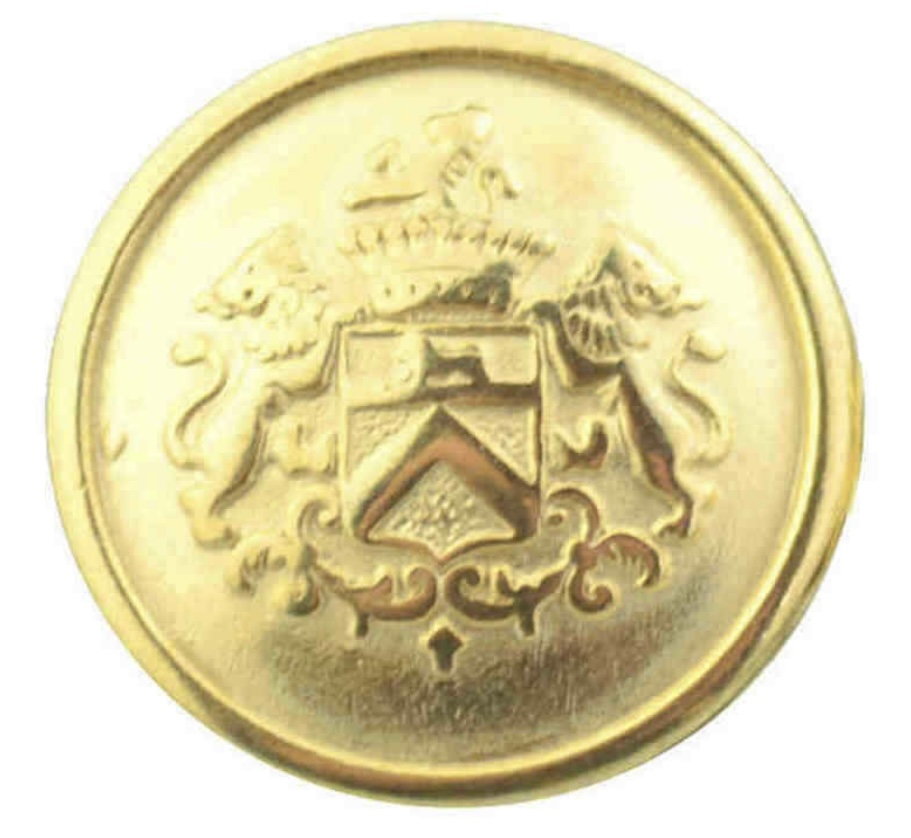
“Royal Livery” stems from European royalty especially English & French and Spanish. Royal Livery is also called “Ceremonial Dress” which is worn by the male servants of a royal family. The Royal Livery is the fancy coat/with fancy vest with gold ropes and threads, the colors might be red & gold/ blue & gold. English Royal Livery would also have a badge with Crown at the top & “ER” for the Queen Elizabeth. The Royal livery buttons are often simply made with the crown symbol as the image.
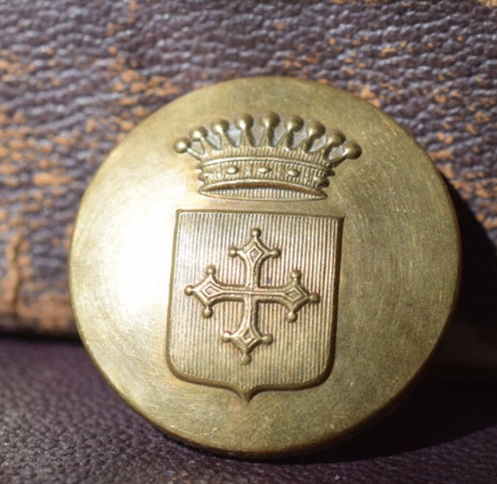
The French livery uniforms seem to be fancier then other cultures. On the French uniforms: they have many more livery buttons too; like 22 buttons on the front of the coat & 3 layers of lace as the tie. These fancy uniforms are worn by a Palace male staff members (such as the Footmen or Butler or Under-Butler) with special livery brass buttons. The Royal livery buttons would have a crown at the top with the family crest & sometimes symbols of the family crest (a stag, a cross, or wild boar, etc.).
Those Royal staff members were the Butlers, Under-Butlers, Footmen, Coachmen, or Horsemen would wear these special, very elegant costumes/uniform for special or ceremonial events. In their “service” for the King or Queen or a wealthy family such as a Duke or Duchess, etc. Sometimes, the outside staff like the Coachmen & the Horsemen wore hats (that looked like George Washington’s hat or a black velvet huntsmen hat ); also the staff of a big house/estate, mansion, or palace would wear costumes, too. The other uniform that these staff members would wear was called “Formal Day Dress”

“Full Livery” in Gilded Age (America)
In the Gilded Age in America, many wealthy families took on the tradition of “Full Livery” costumes or uniforms, like the Vanderbilts & the Huntingtons. Usually, seen in period dramas like “HBO Gilded Age” or classical Gilded Age movies like “Age of Innocence”. Some took on the tradition of the royals & had fancy red & gold livery colors. But whether they had fancy “Royal Livery” (fancy coat with red & gold or green & gold/ or blue & gold) or a formal livery – which was a tuxedo-like suit, each & every wealthy family had personized livery buttons for their staff to wear on their uniforms.
Everyday Livery – “Formal Livery” (Gilded Age)
Head Butlers or 2nd Butlers:
During the day, the 1st Butler or Head Butler & the 2nd Butler (sometimes called a Under-Butler) of the House were usually in a black tux with tails, long black pants, & fancy livery brass or gold buttons. This uniform also included were white tie, tails on the back of their coats, & white gloves. In many of the Huntington’s records and payroll Angus McGillvary was head butler. In 1911 Alfonso Gomez was hired on the stop by Mrs. Huntington. He started as a 2nd Butler and became the Head butler or 1st Butler. In 1916, Huntington’s the head butler at the Huntington Mansion (No.2 NYC) was Thomas Kelly, but his name was usually listed on payroll at Huntington’s Homestead estate in Throggs Neck, Westchester Co. NY .
Footmen:
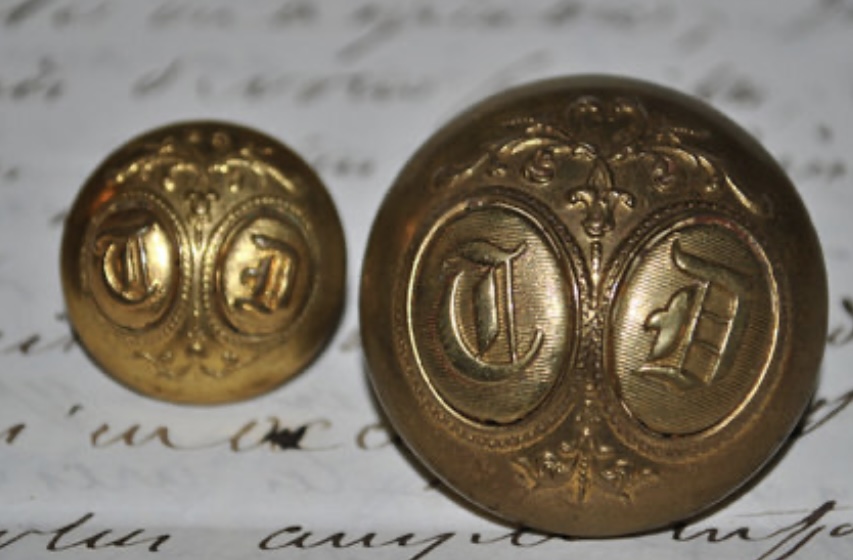
You can tell who is the footmen because he usually wears a horizontal striped vest with a long coat with many brass buttons. The footman could have 6 to 12 livery buttons on his double-breasted coat. Those footmen coats with brass/gold buttons are about 1 1/2″ & the footman’s striped vest had smaller buttons (1 “) with same image as the coat buttons . Full Livery uniform by the servants of a particular household. It was worn especially at fancy dinners, entertainments, & parties. Some costumes were very ornate with a color for the family, like red with gold or blue with gold embroidered uniforms. The Huntington livery gold/brass buttons could have been several different images: like their Huntington family crest, the family’s initials (CPH or HEH), a stag, a ship for the family business, etc.
H. E. Huntingtons (Arabella and Edwards) 4 Footmen Listed on “No. 2” Payroll (1916)
Various Huntington footmen are listed on payroll sheets & Huntington document. In February of 1916 was at the H.E and Arabella Huntington Mansion at No. 2 57th Street, New York City New York: The 1st Footmen was Frank Milligan (highest paid at $80.00 a month) of the Huntington’s footmen. 2nd Footman was Robert Boose ($60.00 a month), he was often listed at the Throgg’s Neck “Huntington Homestead” estate. I saw the name James Temple as a footman (he was also a Huntington “Traveling Servant”) & James Pelger listed as footmen. So in this year of 1916, one sees the Huntington’s 4 footmen listed, serving the H.E. Huntington’s (“Belle & Edwards”) all their formal meals. Where the Huntingtons instituted had Full Livery footmen in their households & were served like royalty.
During the day, the Butler of the House was usually in a black tux with tails & long black pants & fancy livery brass or gold buttons; this uniform with white tie & tails. You can tell the footmen because he usually wears a horizontal striped vest with a long coat with many brass buttons. The footman could have 6 to 12 buttons on his double breasted coat. Those coat brass/gold buttons are about 1 1/2″ & his striped vest had smaller buttons with same image as the coat .
Footmen & Butlers with white gloves: (San Marino Ranch)
Some of the livery costumes were more like a tux-like white tie & tails with a vest. Probably worn during the day formal but not full livery. It seems like the Butler had a more dignified or fancier uniform. The footmen seemed to always have a striped vest with their uniform.
Each high society wealthy family had livery colors, that was related to the colors on their familys crest. There is evidence in the Huntington papers that the Huntington’s color might have been blue & gold. Often, coats were ordered in this color for employees /servants in their Huntington mansion in New York City. Mr. Alfonzo Gomez, states in his interviews that while abroad on a ship that 3 butlers/footmen wore blue suits while traveling with the Huntingtons. In the Huntington biographies & stories, it is often written the footmen or 4 butlers were in “Full Livery like Royalty”. I assume that that the Huntington’s colors might have been: Blue & Gold with fancy brass or gold buttons on their coats & vests. The Huntington’s could have chosen these gold/brass buttons – their initials or their Huntington family crest. Some of the coats & vests had gold ropes & fancy gold embroidery on them, also.
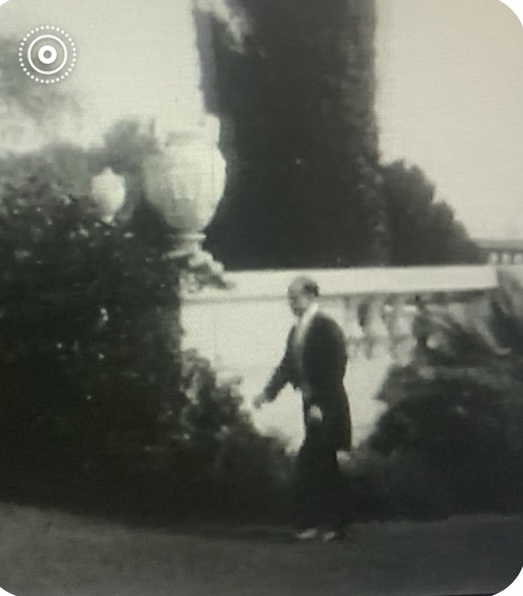
I found a 1960’s movie about the H. E. Huntingtons at the San Marino Ranch. It has a camera shot of a man walking in a tux, (above) during the day. I think he might be the Mr. H. E. Huntington’s Head Butler, Mr. Angus McGillvary. He is walking from the Huntington’s terrace at the San Marino Ranch to the Billiards Room/Bowling Alley. It seems that “Belle & Edwards” chose more of a tux like livery uniform at their Huntington mansion at the Ranch. He has on white tie & cut-away tails, a vest, & spats on his shoes, & no hat.
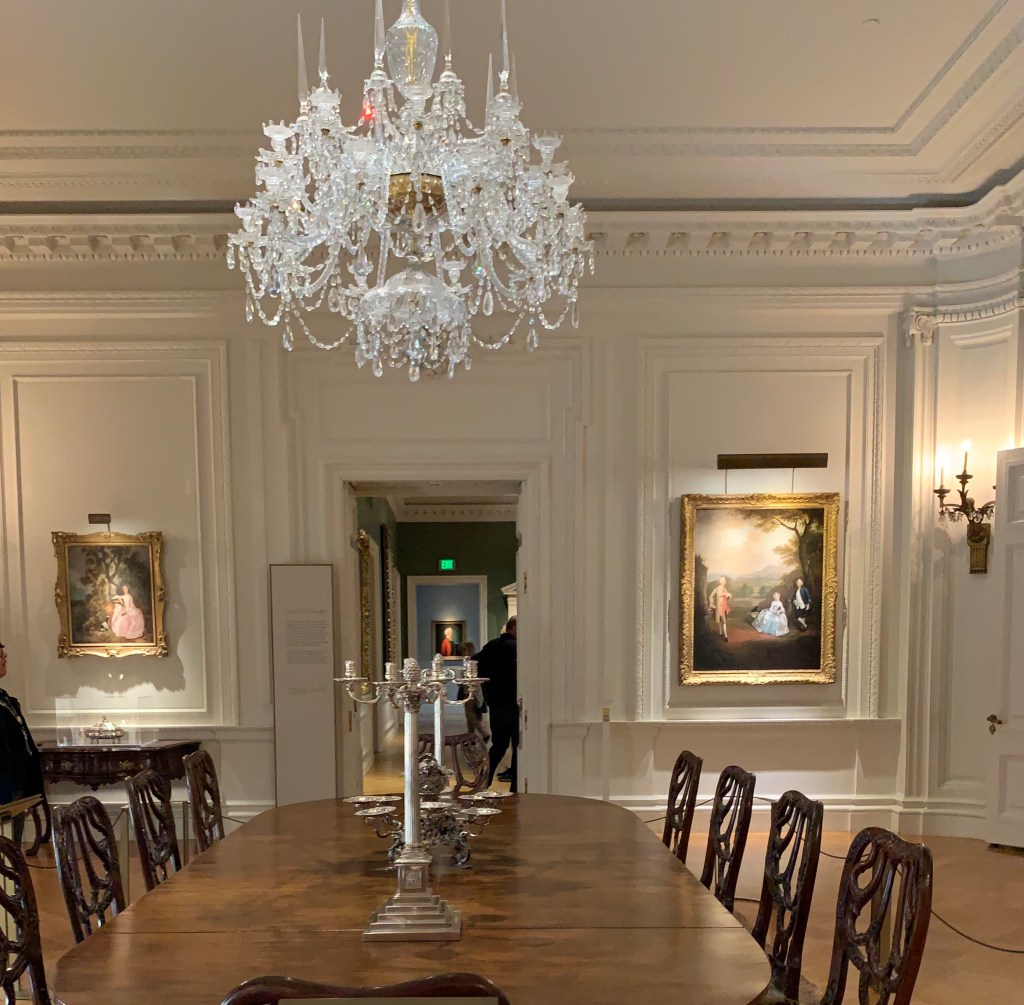
But the camera shot in this movie was during the day, so maybe the butler/footman uniform in the day was the tux or cut-away coat & at night was “Full Livery” more formal affairs. I have read that several times in books about the Huntingtons like the Thorpe book. “Full Livery like Royalty”, would be a fancy uniform with double breasted blue & gold coat, a vest, short pants to the knees & shoes with buckets (like Pilgrim shoes).
Wealthy Gilded Age families – Livery Brass Buttons
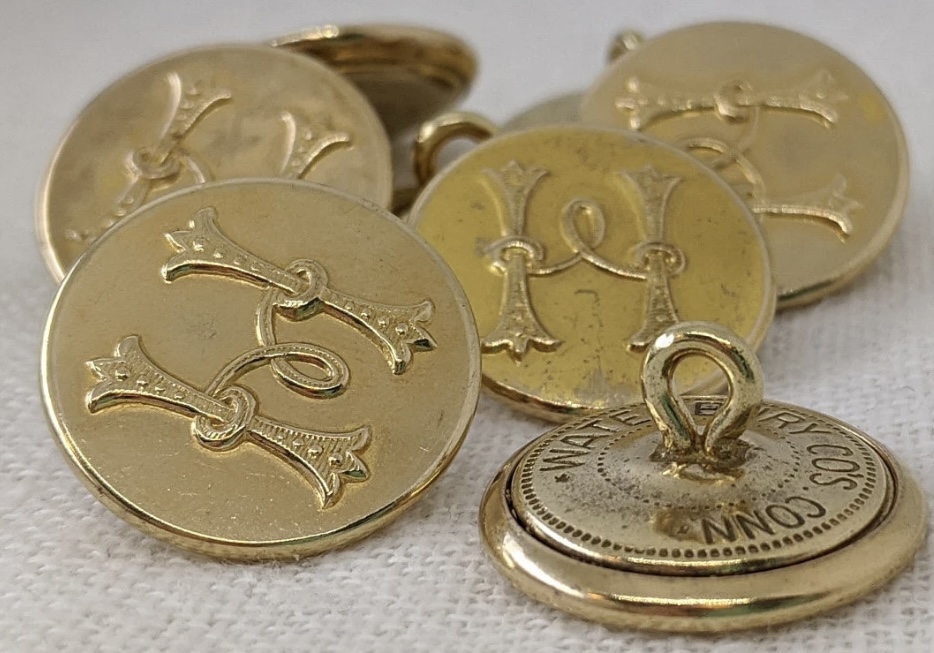
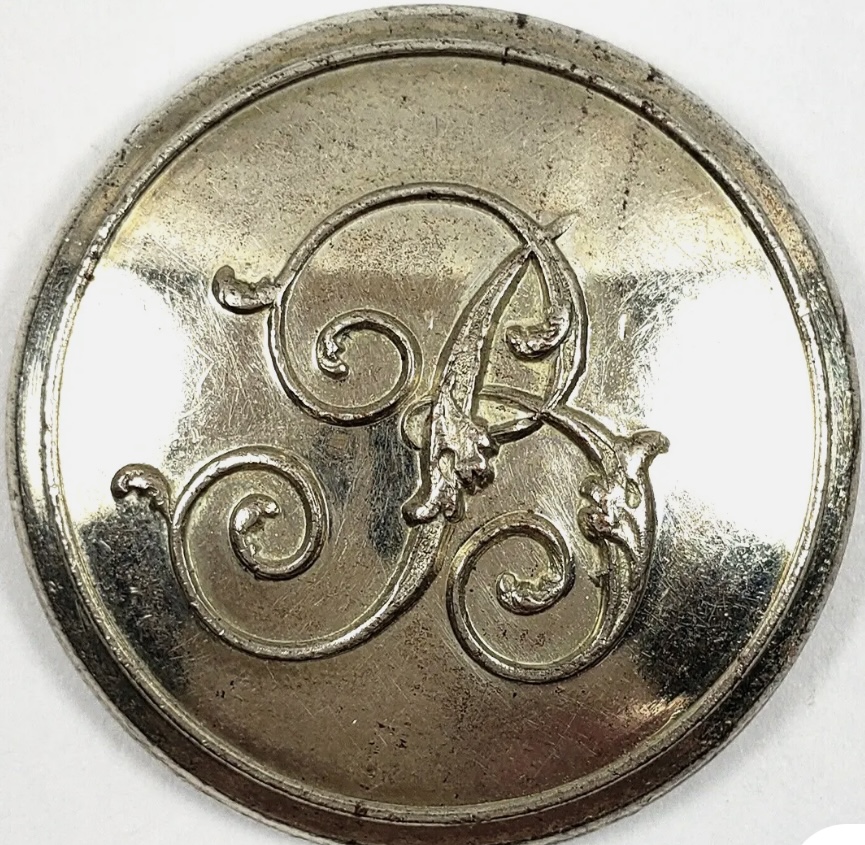
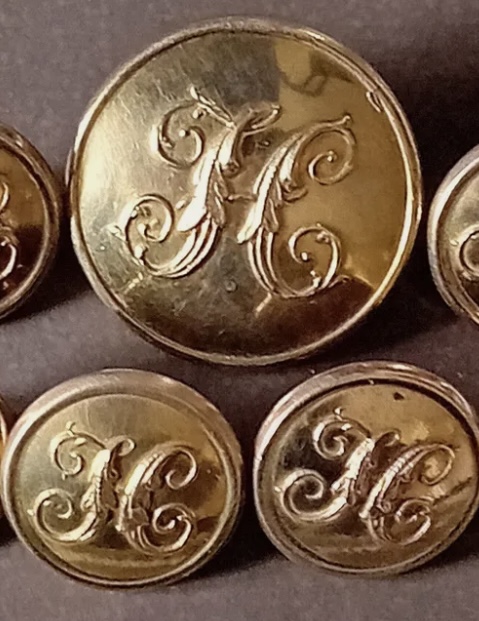
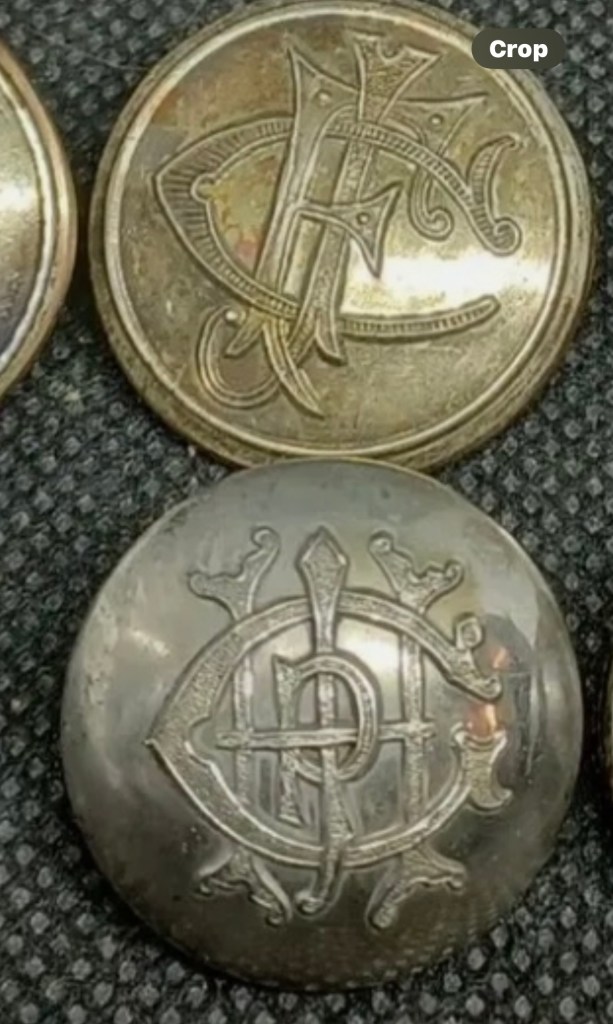
What makes these uniforms special (coats & vests) of the “livery buttons”. Some wealthy family choose to put their family crest on the shiny buttons or the initials of the family. In the Gilded Age 1880-90’s, some of the initials are very ornate with 3 letters in script font, floating into each other. In the Huntington’s case, it could “C H P” for Collis Potter Huntington or just plain “H” or a bright gold/brass button. The Huntingtons could very well had both: “CPH” when Collis & Belle Huntington built the mansion NYC in 1890 until Arabella married Henry E. Huntington in 1913. At that point she might have had to change all the livery buttons to just “H” for Huntington. A USA company called Waterbury Button Co. in Conn. made thousands of these shiny beautiful buttons for the military, ships, train companies, & estates from the 1800’s-1900’s.
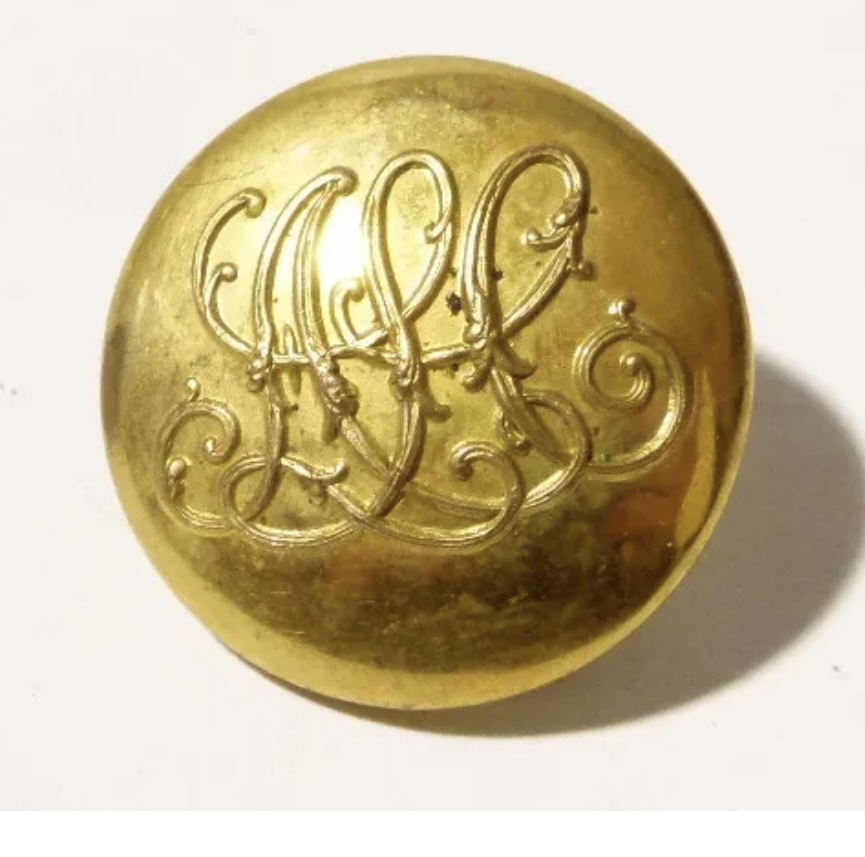
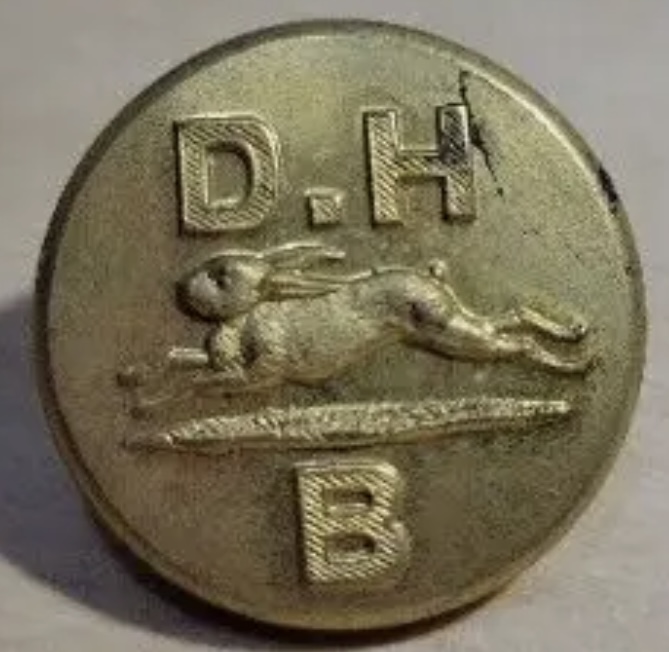
Chateau Beauregard Livery -Napolean III who built the Chateau – Royal Livery buttons
The Livery for a French chateau such as Chateau de Beauregard by Versailles/Paris would have a crown on the livery buttons. The chateau was once owned by royalty: King Napoleon III. The crown being the symbol of French nobility such as a Marquis or Comtesse. King Napoleon III built & owned Chateau Beauregard, he gave it to his favorite mistress, Miss Harriett Howard & called her the Comtesse Beauregard. It seemed that at the Chateau, the livery buttons might have been gold/brass with a crown on them or his family crest. Maybe a “N” for Napoleon with fancy French scroll work behind the “N” gold livery buttons. Maybe fleur- de- lis design.
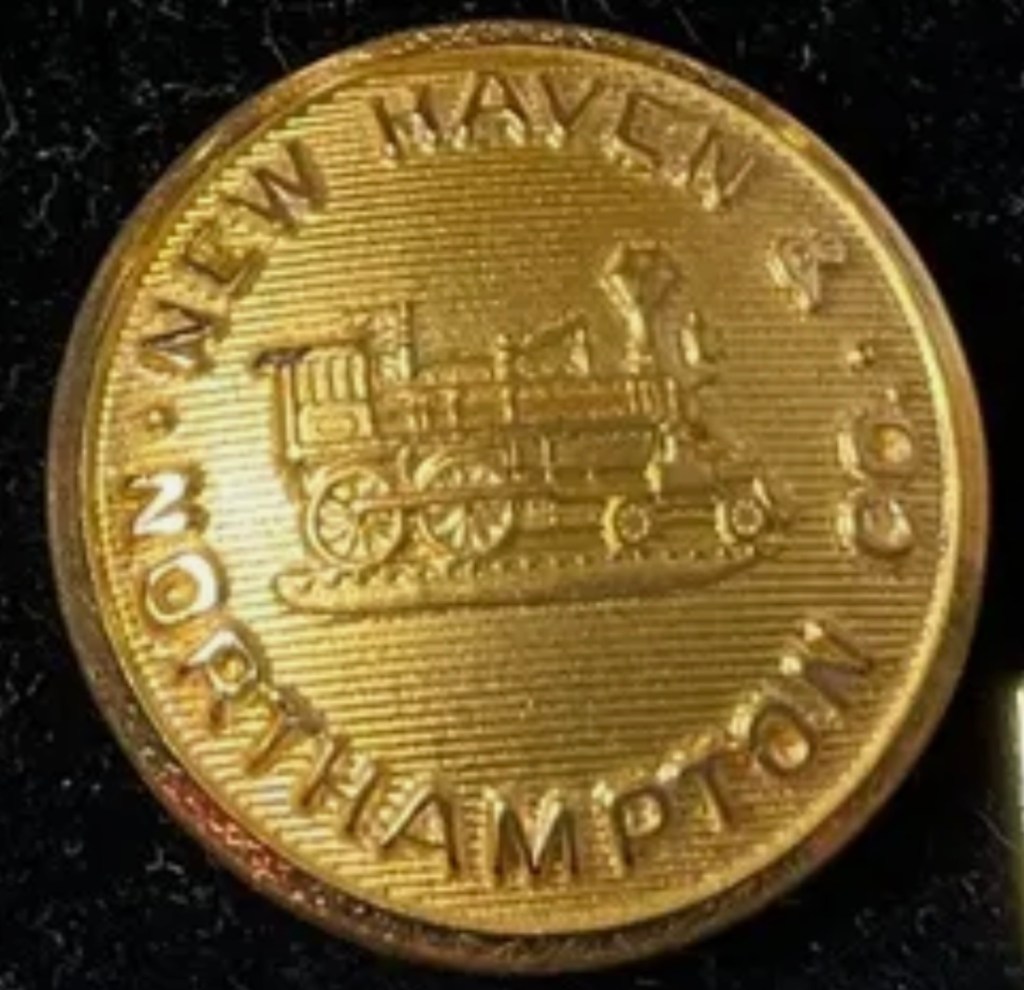
Livery Buttons for ships, trains, & private clubs etc.
In the Gilded Age, these livery brass buttons identified someone job. They were used in all kinds of industries like ships & railroads, hotels, country clubs (Initials of the club), hunting clubs, palaces, large estates, & mansion households.

Train Livery brass buttons
Like a train conductor on a train or a trolley had a jacket with brass buttons stating “conductor”. In the large trains, going across the country they would have the initials of the train like “SP” for Southern Pacific Co. (which Collis Huntington was the President of) or “PE” for Pacific Electric Railway Co. (owned by Henry E. Huntington)
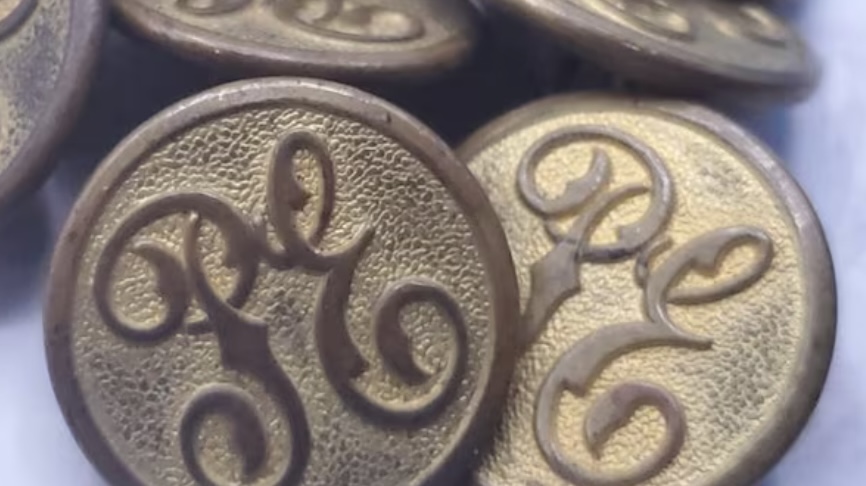
Edwardian Livery Buttons
Edwardian Livery seems much more simple. But very smartly dressed while in the mansion household or out shopping for the family. The footmen proudly wore: a dark black cut away coat with 6 livery gold-brass buttons in the front. 6 more livery buttons in the back of cut-away coat and 2 livery buttons on each of their sleeves. Long black pants with shiny black shoes. The footmen wore a striped (horizontal) vest with 6 buttons (smaller then the coat buttons). A white or gold bow tie with a crisp white shirt & white gloves to serve the household a multi-course meal at the dining room table.
 Inside the Huntington's Story