

by Nancy Armitage
Today, I just received a lovely little book in the mail. It is called “FIVE-O’CLOCK-TEA ” Victorian afternoon tea recipes by Mary L. Allen, first published in 1887. It clarifies a lot of questions I had about this little tea ritual, was it a snack or a meal? Was it “Tea & Cake” or did it include tea sandwiches, scones & desserts like “Afternoon Tea? In fact, in America we don’t even hear the term, “Five O’ Clock Tea” anymore; except in Spain, France, & Brazil they do make mention.
Mrs. Allen also includes a lot of herb & spices used in the old-fashioned recipes. There can be a huge difference in a tea sandwich if one adds herbs like French Tarragon, Lovage, Watercress, Chives, or Parsley. Mrs. Allen put watercress & cayenne pepper in her salmon sandwiches. In her Nasturtium leaves sandwiches (peppery tasting leaf herb) had a combination of anchovy paste, sweet butter, & colorful orange & yellow nasturtium flowers & their leaves. That would be a tasty & flavorful tea sandwich.

The term “Five O’clock Tea”:
Five O’clock Tea is a Victorian & Edwardian tradition enjoyed from 1800’s to early 1900’s, and started in England. It was a tea event in England, France, & came to America later. In the book, Five O’ Clock Tea by Mary L. Allen, published in 1886, it states that it was a meal, not just “tea & cake”. At Five O’clock Tea, they enjoyed hot beverages like Tea, Coffee, & hot Dutch Cocoa.
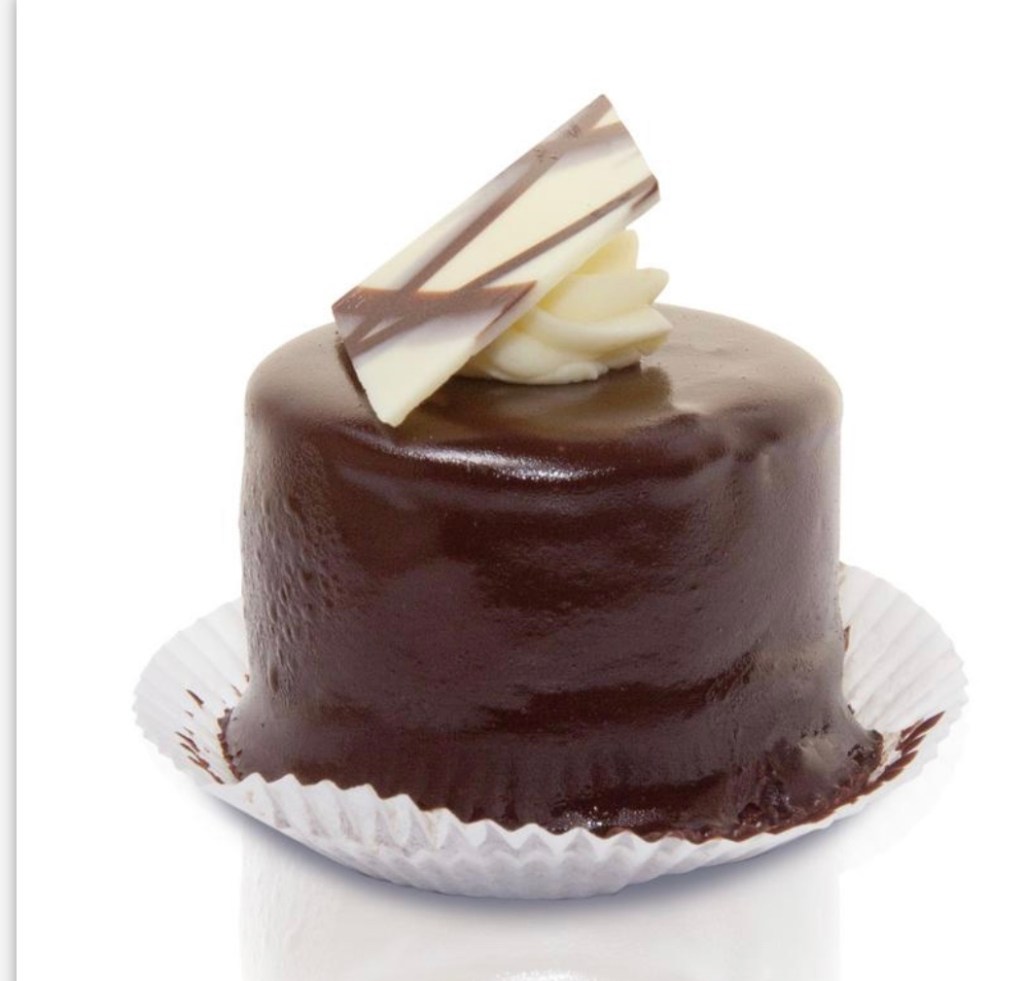
For libations, Miss Allen states they served Champagne Cup, Hock Cup (Hock was a Victorian white white), Silver Fizz, or Claret Cup (Claret is a red wine). For cold beverages, they had lemonade & Iced Tea. The Tea Sandwiches listed were Lobster Mayonnaise Sandwich, Pate de Foie Gras Sandwich, Olive & Anchovy Sandwich, Egg & Gherkin Sandwich, Caviar Sandwiches, Potted Salmon Sandwich, & Salisfy Sandwiches (Mrs. Huntington grew salisfy in her vegetable garden at the San Marino Ranch). Drop Cakes [are what we know as “Scones” today] & Lemon Biscuits [Cookies]. To finish this lovely tea ritual they had numerous Tea Cakes like Cupid Cakes, Chocolate Cake with Chocolate frosting (with raspberry jam spread between the layers), Raisin Cake, Windsor Castle Pound Cake, Gold Cake, Gingerbread, or Silver Cake. I am excited to find “Cupid Cakes” how perfect to have for tea on St. VaIentine’s Day!! I have been looking for the recipe for Victorian Cupid Cakes or Cupid Mottos for a long time.
Salsify (or Mock Oyster) Tea Sandwich (1886) Salsify is a Southern garden vegetable that tastes like Oysters (it is sometimes called “Oyster plant”). In the Five O’ Clock tea book – The ingredients were 1 tinned loaf of brown bread, 3 roots salsify, marinated in 1 wine glass of vinegar [champagne vinegar & sliced]. The spicy butter spread mixed up in a small bowl: 1/2 c. cream, 2 t. anchovy sauce [paste] cayenne pepper, juice of one lemon, 1/2 lb. of butter [to spread on the bread first] cut bread into round shapes. [It is probably better to peel the salsify root and sauté it in butter, it tasted like artichokes and heart of palm to me]
Lobster Mayonnaise Sandwich (1886) was a combination of 1 cooked lobster, with butter on bread slice & Homemade mayonnaise made with the yolk of eggs, salt, cayenne, & white pepper, pinch of nutmeg, dry mustard, lemon juice, drops of tarragon vinegar, anchovy sauce, & Lucca oil. French chervil leaves, & watercress leaves laid on top. Then the tea sandwiches were cut into 2 ” squares &d laid on a napkin.
Cupid Cakes (1886)
I love the romantic name of these little cakes. On Victorian menus, I often would see “Cupid Cakes” or “Cupid Mottos” in the Dessert portion of a formal dinner menu. But I never could find the recipes for either one. But then I finally found the recipe! The “Cupid Cakes” original recipe in the cookbook Five o’clock tea by Mrs. Allen (1886) had candied peel. For St. Valentines day, they are much better with dried red cranberries or red dried cherries (Trader Joes).
1/2 oz. yeast with 1 c. warm water
4 eggs
1 1/2 lb. flour
1 lb. butter
1/2 lb. “pounded sugar” (powdered sugar)
1/2 c. milk
1/4 lb. dried cranberries or cherries, mince with a scissors
In a medium bowl, add flour & in the center eggs. Dissolve yeast in warm water & add yeast & milk to flour. Mix until dough. Melt butter add slowly to dough. Knead, place dough in a warm place for 1 hr. to rise. Then add sugar. Bake in small heart-shaped muffin pans. Top with dried cranberries or cherries. Bake 350 for 25-30 minutes. Recipe: Nancy Armitage
“Five o’clock Christmas Tea” (1905)
I viewed a 1905 menu titled “Five o’clock Christmas Tea” at Macy’s Department store in New York City, NY. It stated they would be serving Five O’Clock Tea : Oolong & English Breakfast Tea, Assorted Sandwiches, Marmalade, Macaroons, Lady Fingers, Uneeda Biscuits [for children -“finest crisp soda cracker ever baked”], Ice Cream for 24 cents. So it is interesting to me that in America they didn’t include a scone, the biscuits are a soda cracker. Document: http://www.images.nypl.org

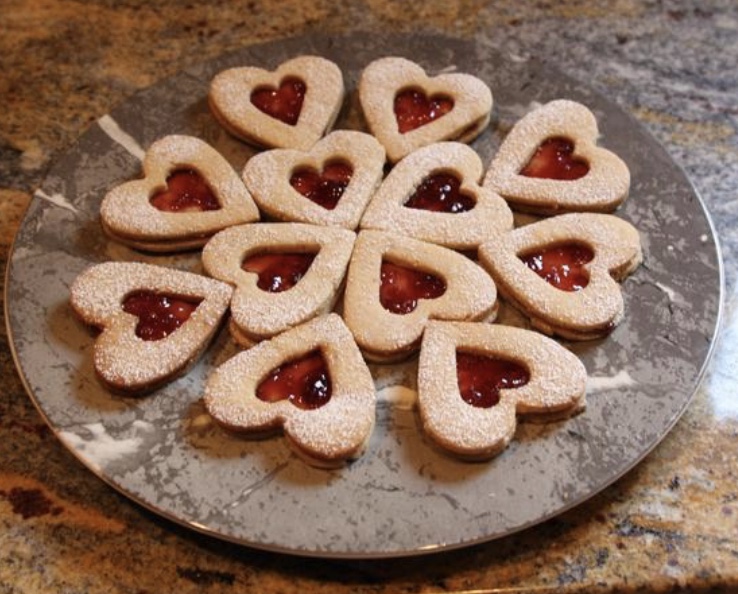
St. Valentine’s Heart-Shaped Cream Scones (The lightest scone ever)
Try these! They melt in your mouth they are so good! This is one of my very best recipes. Have little pots of Orange marmalade (add a little grated ginger), French Chantilly cream (flavored with French powdered vanilla or coffee), Lemon Curd, or Lemon yogurt with ginger, or Raspberry jam. Pure Heaven! I asked my baker friend, “why are my scones turning out like hockey pucks?” She asked me, “Are you using milk or heavy cream?” I said, “milk, that is what the English recipe called for”. She told me use heavy cream….she informed me that in England, especially on the farms, their rich milk is heavy cream – rises to the top of the barrel & all. I learned that heavy cream makes these scones light as a feather!
2 c. flour
2 t. sugar
1 t. salt
1 T. baking powder
1 c. heavy cream
Preheat oven 425@. In a large bowl, sift together dry ingredients. Add the cream slowly to make a soft dough, use your hands to mix when it reaches a ball. On a floured board, knead gently to retain the air needed to let scones rise. Roll out to 1/2″ thick. Cut with a heart-shaped cookie cutter. Place on ungreased cookie sheet, leaving 1/2″ space between scones. Bake 10-12 minutes or until golden brown. To serve: put a napkin in a silver bowl, add hot out of the oven scones & cover. Serve with raspberry jam & “Chantilly cream” (whipped cream with vanilla powder added). Or orange marmalade with fresh grated ginger added Recipe: Nancy Armitage
In Victorian cookbooks, I have also seen tea blend called “Five O’clock tea blend” & I have seen “Five o’clock tea Biscuits” (in America, we call them cookies below). Several pieces of Gilded Age art had “Five O’clock Tea” for the title, like Mary Cassatt she painted in 1880, located at the Museum of Fine Arts in Boston, MA.
Five o’clock Tea Biscuits (Orange or Lemon Shortbread) (1914)
This is a simple recipe that makes great shortbread cookies. “Five o’clock tea” was a British & French tradition; tea was served at five o’clock. It was became popular in America in the late 1800’s. Five o’clock tea biscuits were popular in America in 1914. Per a rare book of Mr. H. E. Huntington’s, called Daily Life in America by Alice L. McLean. For St. Valentines Day, add chopped dried cranberries or cherries instead of the orange or lemon peel & use a cookie cutter in the shape of a heart.
1 c. butter
1/2 c. powdered sugar
2 r. orange or lemon peel or zest
2 c. flour
1/4 t. salt
little milk & egg white to moisten
Cream the butter & sift together the flour, sugar, and the salt. Blend the dry ingredients into the butter. For Celtic or Irish shortbread, pat the stiff dough onto a cookie sheet & form into a circle, with a fork pierce into the dough several times. For fancy cookies (or biscuits they call them in England), buy fancy cookie cutters shapes like hearts, Christmas trees, or turkeys. Sprinkle with powdered sugar. Bake 350 for 20-25 minutes until golden brown. Recipe: Nancy Armitage adapted from Daily Life in America by Alice L. McLean
When did “Five o’clock tea” change time?? Well, I’ve read that it was the Ritz Paris that actually change this ritual’s time. The story goes that the famous head chef at the Hotel Ritz Paris named Auguste Escoffier was unglued that people were not eating his beautiful dinner meals. So they went on a quest to figure out why their hotel guests weren’t eating his food. They found out that people were having lovely “Five O’Clock Tea” from 5-7 pm & dinner time was a 8:00 pm. People were filled up with their delicious tea & cakes & not be able to eat their dinner. So the Ritz Paris decided to move “Afternoon Tea” to 3:00 o’clock in the afternoon. This is so the tea didn’t spoil everyone’s dinner experience. Other hotels & clubs followed. This is probably the time period where they drop the phase “Five O’Clock Tea. Hence the reason why the term Five O’Clock tea floated away, & “Afternoon tea” is used.

“There are few hours in life more agreeable then the hour dedicated to the ceremony known as afternoon tea.” – Henry James
 Inside the Huntington's Story